Getting to the Vatican side: metro, tram and on foot
The Vatican sits across the river from the old centre, and the way you arrive shapes the morning. The metro is quickest, the walk over the bridges the most rewarding.
Trains are quiet before eight; from mid-morning carriages towards Ottaviano fill with groups, and the tram and buses run crowded.
 06:45
St Peter's and the Vatican Museums are on the west bank of the Tiber, outside the bend of the river that holds most of historic Rome. That means a short journey from almost anywhere you are likely to be staying, and a choice of ways in. For an early start, the metro is the quickest and most predictable. For the experience of arriving, nothing beats walking over the river and seeing the dome come into view. Transport routes and timetables change, so check the current ones before you set out.
By metro: line A
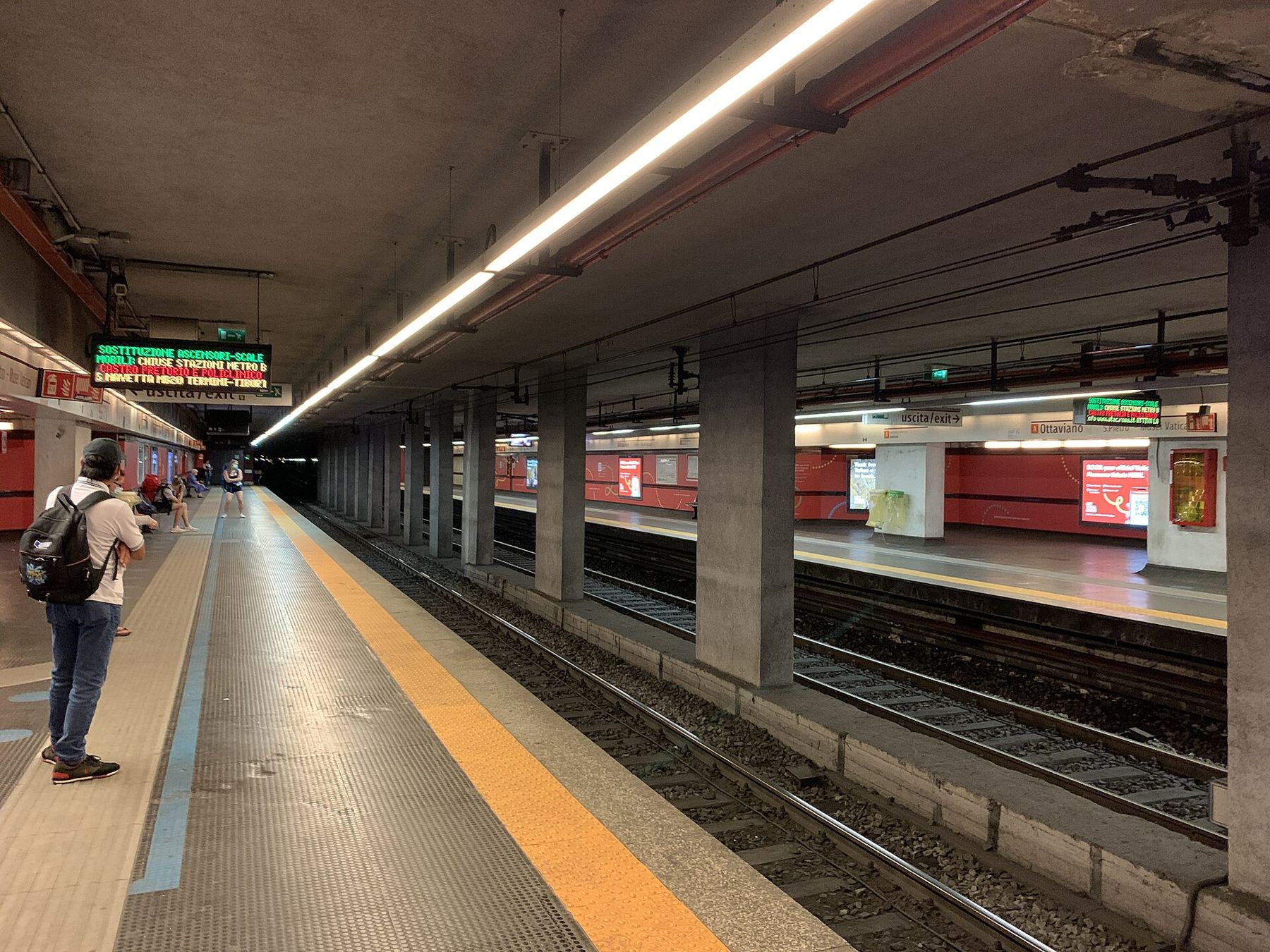
Rome's metro is small, and only one line comes near the Vatican: line A, the red line, which crosses the centre from south-east to north-west. Two stations serve the Vatican side.
Ottaviano, signed with the words S. Pietro and Musei Vaticani, is the usual choice. From its exits it is about ten minutes' walk south down Via Ottaviano to St Peter's Square, and about the same west along the Vatican wall to the Museums entrance on Viale Vaticano. Cipro, one stop further out, is slightly closer to the Museums entrance and often less crowded at the exit; from there it is a short walk along the wall.
From Termini, the main station, take line A in the direction of Battistini. It is six stops to Ottaviano, through Repubblica, Barberini, Spagna, Flaminio and Lepanto, which makes it easy to reach from the Spanish Steps or Piazza del Popolo as well. Lepanto, the stop before, is the one for the Palace of Justice and the eastern side of Prati.
Tram and bus
A tram line ends at Piazza del Risorgimento, beside the Vatican wall a few minutes from both the square and the Museums; it comes across the north of the city from the east and is useful if you are staying in that direction. Several bus routes run from Termini and the centre to the Borgo and the area around St Peter's, along the main streets and over the river by the bridges near Castel Sant'Angelo.
Buses are slower than the metro and can be very crowded, especially the routes that run from Termini to the Vatican, which are well known for pickpockets. Keep your bag closed and in front of you, and phones out of back pockets. On any crowded vehicle, stand where you can see your belongings.
Tickets for metro, tram and bus are shared and are valid for a set time after first validation. Buy them before you board, at stations, newsagents and tobacconists, or tap a contactless bank card at the gates and on board where readers are fitted. Validate every ticket at the start of the trip; inspectors fine passengers who have not.
06:30Another hourDress, days and bags: the rules of a Vatican morningOn foot over the Tiber
If you are staying in the historic centre, around Piazza Navona, the Pantheon or Campo de' Fiori, you can walk to St Peter's in twenty to thirty minutes, and it is the best way to arrive. There are three good crossings.
The classic route crosses Ponte Sant'Angelo, the pedestrian bridge lined with Bernini's angels, straight towards the round bulk of Castel Sant'Angelo. Turn left in front of the castle and you are at the top of Via della Conciliazione, the broad avenue that runs directly to the square, with the dome growing at the far end. Early in the morning you may be almost alone on it.
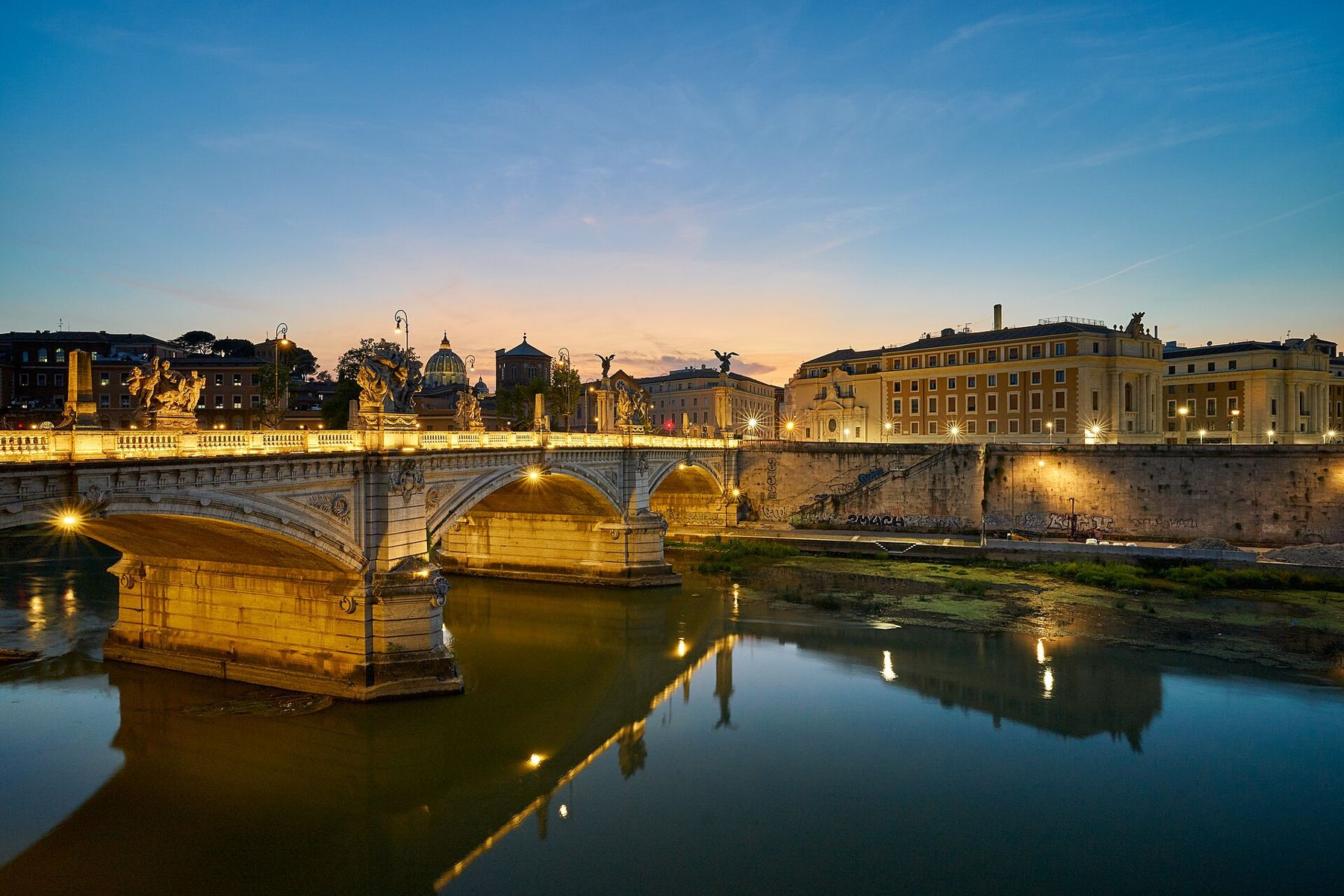
From Campo de' Fiori, walk up to Corso Vittorio Emanuele and follow it west to Ponte Vittorio Emanuele II, the next bridge downstream, a wider road bridge with statues on tall pedestals. It lands you a few steps from the eastern end of Via della Conciliazione. From further south, around Trastevere, you can walk north along Via della Lungara and through Porta Santo Spirito into the Borgo.
If you are coming from Piazza del Popolo, cross Ponte Margherita and walk the length of Via Cola di Rienzo through Prati to Piazza del Risorgimento. It is longer but flat, shaded and a good way to see the quarter behind the walls.
From the station or the airport
From Termini, the metro is simplest, and you will be at Ottaviano in under a quarter of an hour once you are on the train. There is also a small railway station, San Pietro, just south of the Vatican, served by regional trains; it is useful mainly if you are arriving from places along those lines.
From Fiumicino airport, trains run into the city. The express goes non-stop to Termini, from where you take the metro. A slower regional service stops at Trastevere and other stations on the way, which may suit you better depending on where you are going. Taxis from the official rank charge a set fare to the city centre; check the current fare and whether your destination counts as central before you get in.
Arriving early
The metro starts running early in the morning, and the first trains are quiet. If you are aiming to be in the square when the basilica opens, as in our early walk round St Peter's, plan to be at Ottaviano by around seven. Walk down Via Ottaviano, under the colonnade, and join the security line while it is still short.
Coming back is easier still: from the Museums exit or the square, every route leads within ten minutes to Ottaviano, the tram, or the river.
The photographs on this walk are credited by name and licence in I fotografi. The other walks are on the list of hours.
Later the same day
- St Peter's while the square is still empty
- Across the river: the Aventine keyhole at opening time
- Up the dome of St Peter's, step by step
- The Museums, in an order that keeps you sane
- Under the floor: the grottoes and the necropolis
- Mercato Trionfale, the market by the Vatican wall
- Standing under the Sistine ceiling
- Prati at lunchtime: wide streets, cool churches
- The Borgo and the wall the popes ran along