Ponte Sant'Angelo after dark
A Roman bridge, ten marble angels and a lit castle at the far end: walk Ponte Sant'Angelo slowly at night, then find the spot downstream where the dome joins the picture.
No queue. The bridge is busy at sunset and with street sellers early in the evening; by ten it is calmer.
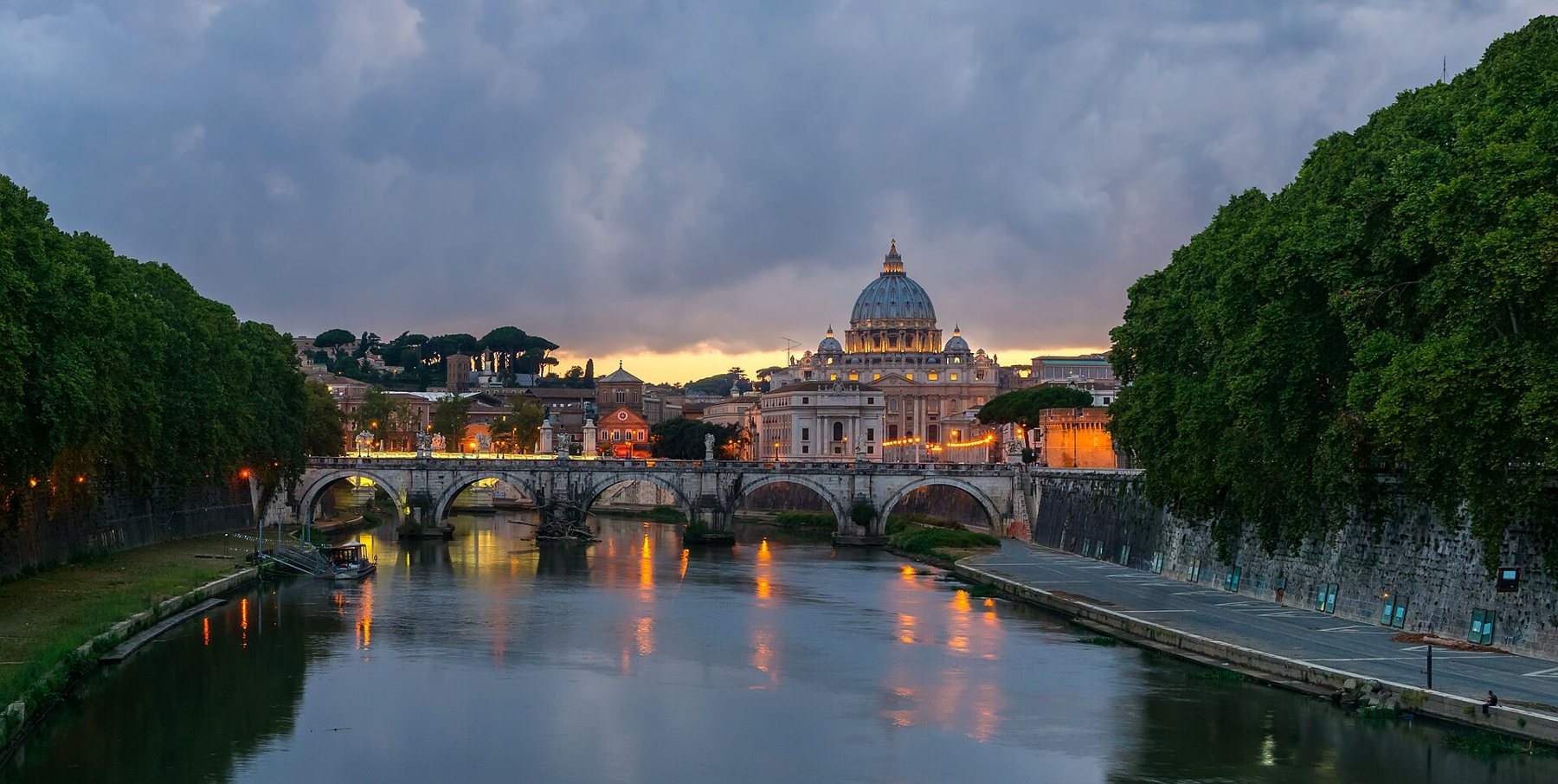 21:00
By day Ponte Sant'Angelo is a crossing, crowded and hot, with people hurrying between the centre and the Vatican. After dark it turns into something else: a pale stone walkway over black water, lined on both sides with angels lit from below, leading straight to the glowing drum of the castle. Come at nine or later, when the light has gone and the crowd thinned, and walk it slowly from the city side.
Hadrian's bridge
The bridge is Roman. The emperor Hadrian built it in the 130s AD to link the city to the great tomb he was raising on the far bank, and the three central arches are still largely his. The arches at each end were rebuilt at the end of the nineteenth century, when Rome raised its high river embankments and the banks of the Tiber were straightened.
For most of its history it was the main way to St Peter's for pilgrims from the city, and it has known disaster: during the Jubilee of 1450 a crush of people on the crowded bridge left many dead. It was also a place of public warning, since executions were carried out in the little square at its city end. Today it is for walkers only.
Peter, Paul and ten angels
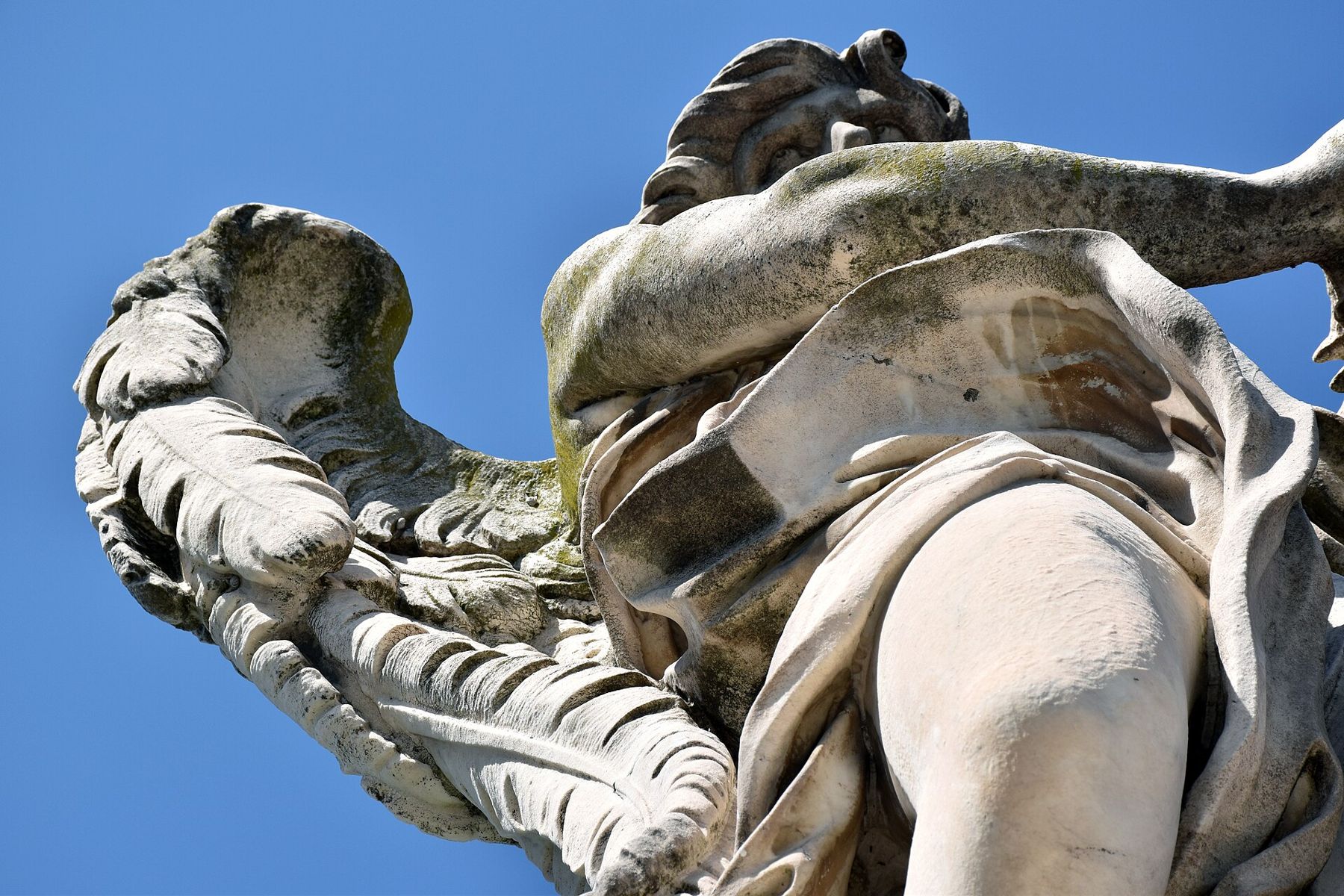
At the city end you are met by two older statues, St Peter with his keys and St Paul with his sword, set up in the sixteenth century. Then the angels begin. There are ten of them, five on each parapet, designed by Gian Lorenzo Bernini in the 1660s and carved by sculptors of his studio. Each holds one of the instruments of the Passion, the objects of Christ's suffering and death, and each base carries a short line of Latin.
Walk from one to the next and read them as a sequence: the column of the scourging, the whips, the crown of thorns, the veil with the face of Christ, the garment and the dice, the nails, the cross, the inscription that was nailed above it, the sponge, and the lance. Their robes whip about as if caught in a wind off the river, and their faces are not triumphant but grieving.
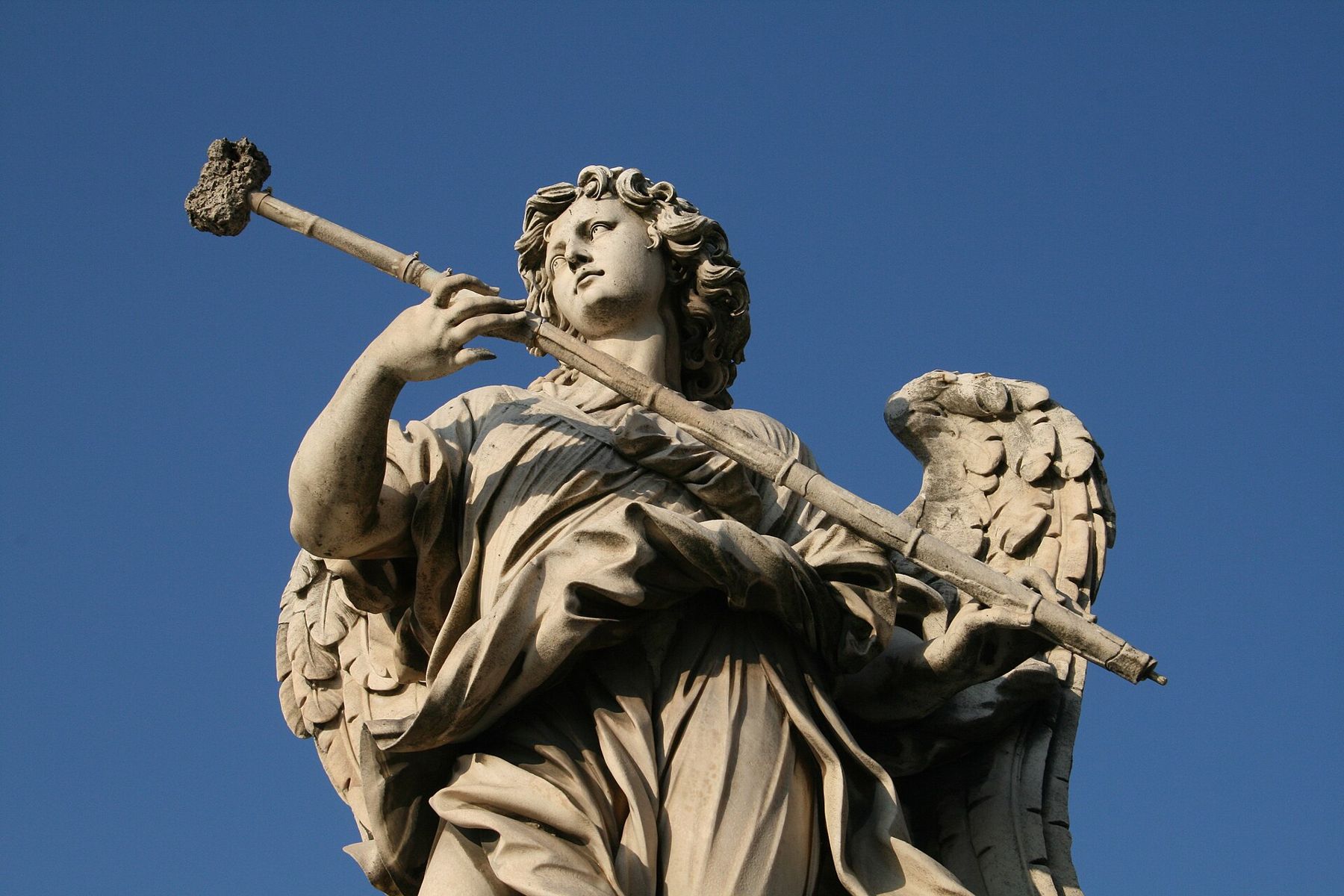
Two of the angels on the bridge are stand-ins. Bernini carved the angel with the crown of thorns and the angel with the inscription with his own workshop, and they were judged too fine to put out in the weather; they ended up in a church in the centre of Rome, and versions by other sculptors stand on the bridge in their place.
The castle at the end of the bridge
As you walk, the castle fills more and more of the view: the round bulk of Hadrian's tomb, the later walls and battlements, and at the top the bronze angel, lit against the night sky. Its gates are closed at this hour unless there is an evening opening, so the night is for looking at it from outside. If you want to go in, plan an afternoon visit to the castle and save the bridge for after dark.
At the castle end, stop and look back across the bridge, the angels in a row against the lights of the centre. Straight ahead, the line of the old wall of the Passetto runs off towards the Vatican; you can follow it by day on the Borgo walk.
Where the dome joins the picture
From the bridge itself, the dome of St Peter's is hidden or half-hidden behind buildings. For the classic view, walk a short way upstream along the Lungotevere to Ponte Umberto, the next bridge to the east. From the middle of it, looking west, you see Ponte Sant'Angelo with its arches reflected in the river and the lit dome rising behind, with the castle off to your right.
It is one of the best night views in Rome, and it costs nothing but a ten-minute walk. Stand on the side facing the dome, steady your camera on the parapet, and wait for the water to settle. On calm nights the reflections are almost perfect.
If you saw the dome from above earlier in the day, on the climb up the dome, this is the other half of the story: the same building, now small and luminous on the far side of the city.
The Tiber below
The river runs between high stone walls, with paved walks at the bottom, the banchine, reached by stairs and ramps from the road above. In summer they fill with stalls and evening events; the rest of the year they are quiet, sometimes too quiet. Walk them in company, keep to lit stretches, and come back up to street level when the paths empty out. After heavy rain the lower walks can flood and are closed.
The plane trees along the Lungotevere above are the better evening walk in most seasons. Their trunks are lit by the street lamps, the traffic is quieter at night, and every bridge you pass offers another view up and down the river.
Staying out after dark
Start at Piazza Navona or the streets around it, and walk west to the river; you reach the city end of the bridge in about ten minutes. Cross slowly, look back from the castle side, then follow the Lungotevere east to Ponte Umberto for the dome.
From there you can return to the centre, or carry on along the river on the Vatican side to Via della Conciliazione and on to St Peter's Square, which at night is nearly empty, its fountains lit and the colonnade glowing. Pickpockets work the bridge when it is busy, so keep your phone and wallet close, and politely ignore the sellers of selfie sticks and toys.
The photographs on this walk are credited by name and licence in I fotografi. The other walks are on the list of hours.
Later the same day
- Dress, days and bags: the rules of a Vatican morning
- Getting to the Vatican side: metro, tram and on foot
- St Peter's while the square is still empty
- Across the river: the Aventine keyhole at opening time
- Up the dome of St Peter's, step by step
- The Museums, in an order that keeps you sane
- Under the floor: the grottoes and the necropolis
- Mercato Trionfale, the market by the Vatican wall
- Standing under the Sistine ceiling