Under the floor: the grottoes and the necropolis
Two levels lie beneath the basilica: the grottoes with their papal tombs, a short walk anyone can take, and deeper down a Roman street of tombs that only small booked groups ever see.
The grottoes rarely queue but close for ceremonies; necropolis places are few and must be requested well in advance.
 09:30
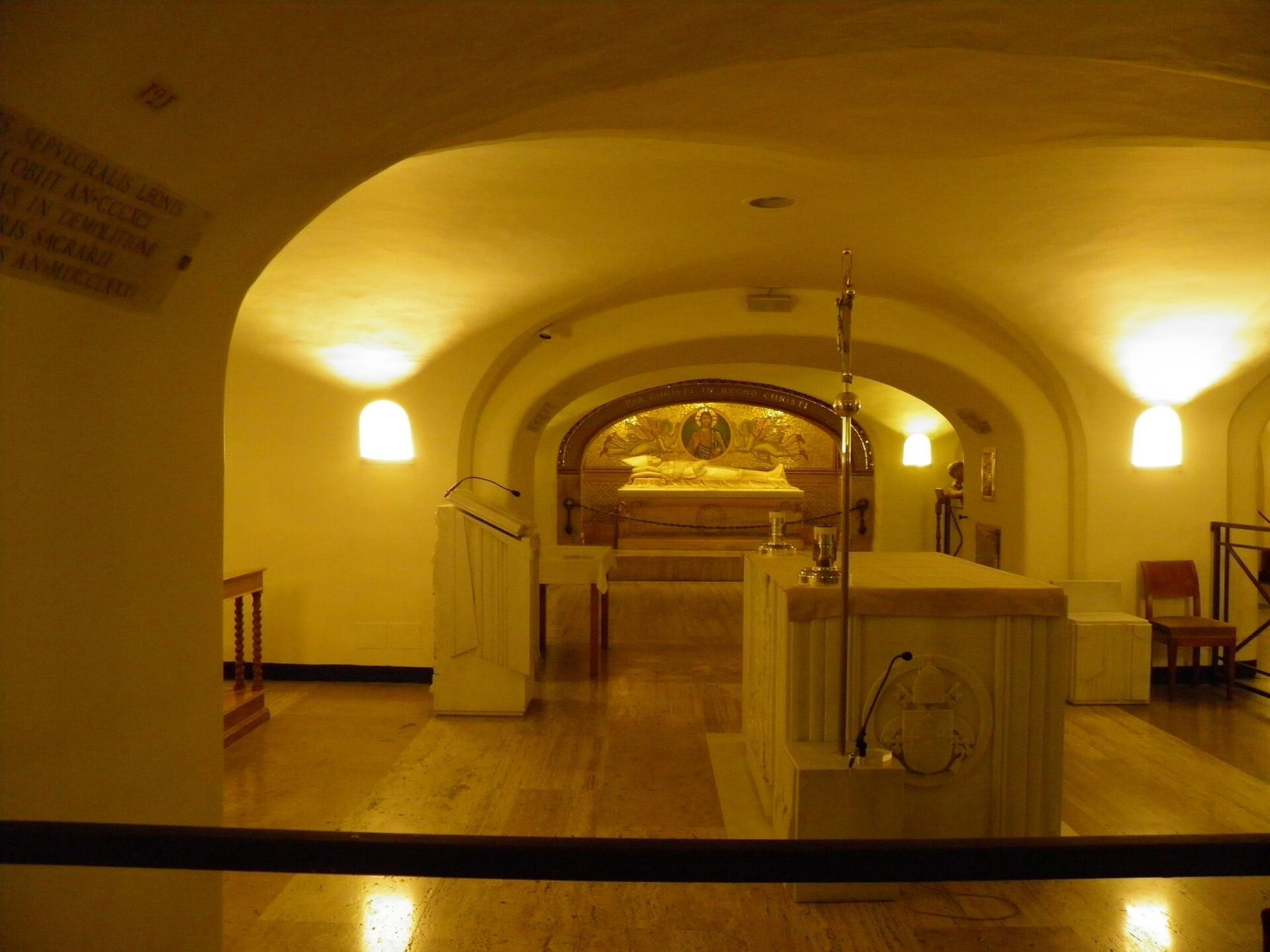
St Peter's stands on top of two older layers. Just below the present floor are the Vatican Grottoes, a low vaulted level full of papal tombs and fragments of the earlier church. Below that, reached only on a guided visit, is a Roman cemetery, a street of family tombs buried when the first basilica was built over it. Both lead, in the end, to the same spot: the place under the high altar venerated as the grave of St Peter.
Into the grottoes from the basilica
The grottoes are part of an ordinary visit to the basilica and need no separate ticket. The way down is usually from near the crossing, by one of the great piers that hold up the dome, and is signposted when open. It closes for ceremonies and sometimes without notice, so if the stair is roped off, try again later in the morning. A visit after the basilica at opening time fits well, since the grottoes are quiet then.
The ceiling is low after the height of the nave above, the light is electric and dim, and the air is cool. A one-way route leads you along curving corridors and past side chapels, with marble sarcophagi set into the walls and floor. The dress rules of the basilica apply here too, and so does the quiet: people come down to pray at particular tombs.
The papal tombs
Popes have been buried under St Peter's for centuries, and the grottoes hold the tombs of many of them, from medieval popes in carved stone coffins to popes of the last century in plain marble. Some lie under simple slabs set in the floor; others rest in sarcophagi with effigies lying on the lid, hands folded. Names and dates are cut into each one in Latin, and you can usually make them out.
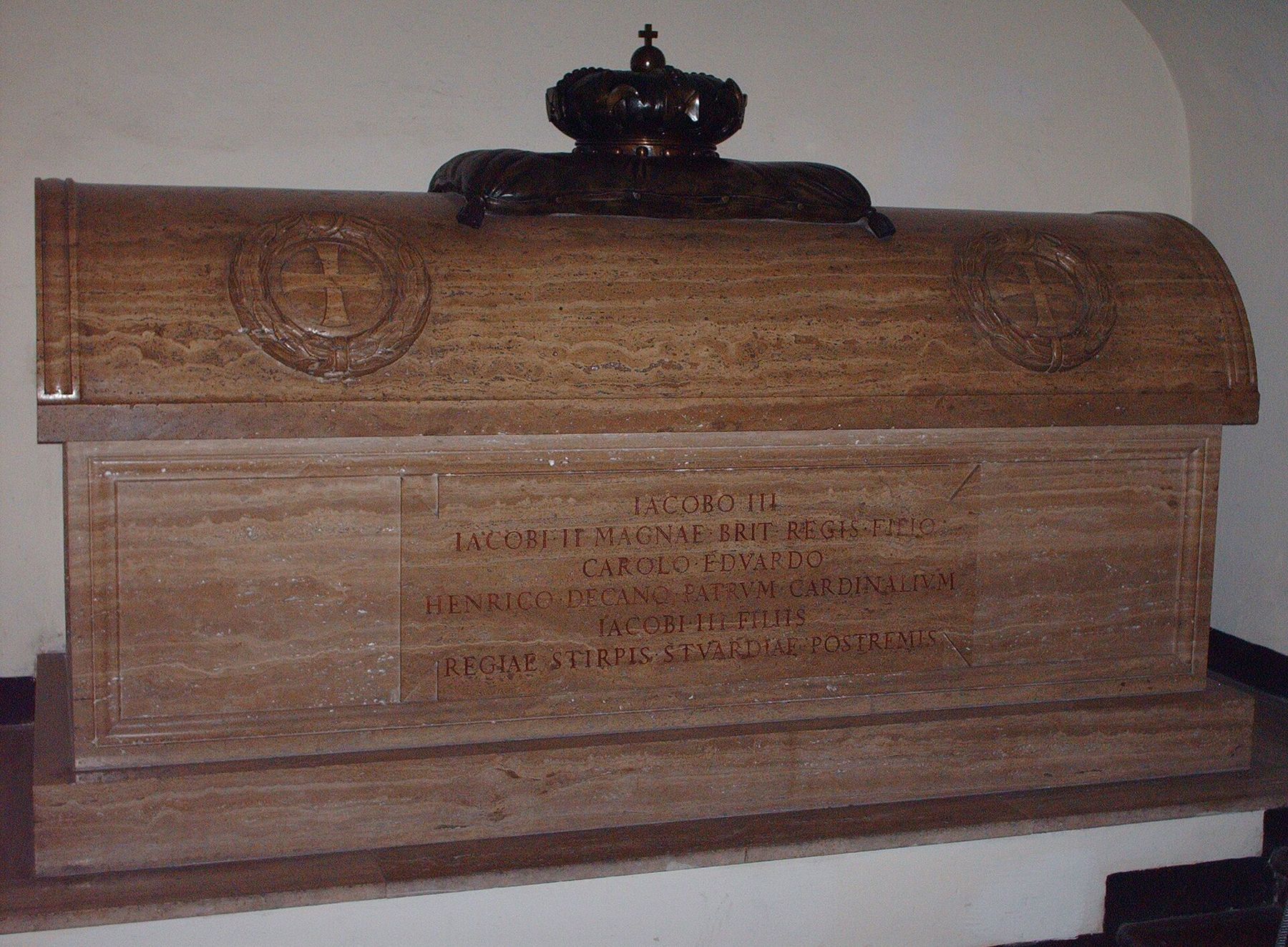
Not every tomb here is a pope's. Look for a plain sarcophagus of banded stone topped with a crown on a cushion: it holds the last of the exiled Stuart line, James Francis Edward Stuart and his sons Charles Edward and Henry Benedict, who lived out their lives in Rome. Their monument stands in the basilica above.
The more recent tombs draw the most visitors, and you may see people kneeling, leaving flowers, or waiting quietly to move closer. Give them room, and follow the signs on photography, which can change; a phone held up in front of someone praying is unwelcome anywhere.
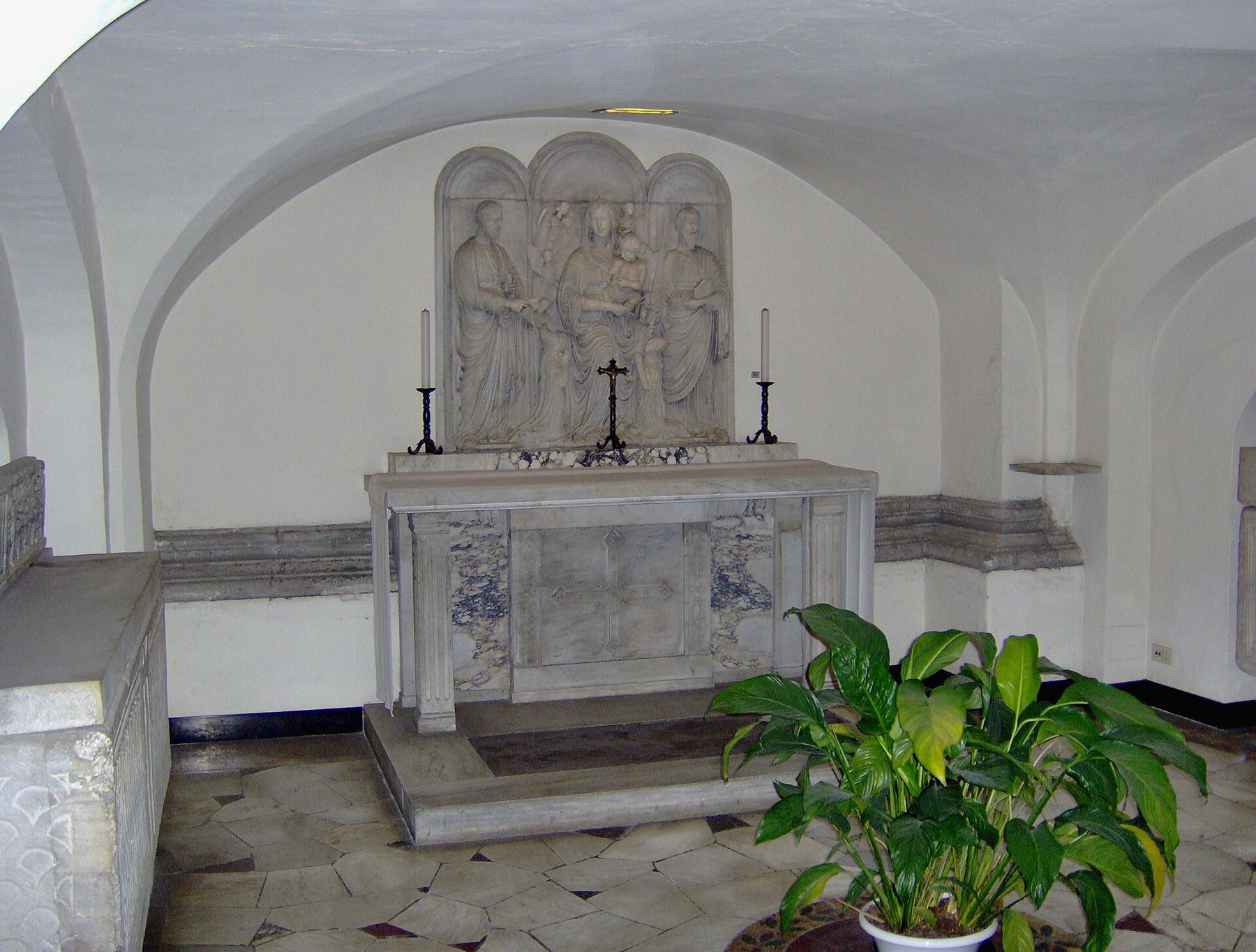
Along the route are pieces saved from the old basilica that stood here before the present building: statues, inscriptions and decorated panels, some of them very old. They give a sense of what was lost when the earlier church was pulled down in the sixteenth century.
Close to the apostle's grave
At the heart of the grottoes the route passes close to the area directly below the high altar and the baldacchino. Through grilles and openings you look towards the space built around the grave of St Peter, with the ancient monument over it and, beyond, a small chapel richly decorated in marble. This is as close as an ordinary visit comes.
06:45Another hourGetting to the Vatican side: metro, tram and on footThe route then brings you up and out, usually at the side of the basilica rather than back into the nave. See everything you want inside the church before you go down, because getting back in may mean the security line again.
The necropolis below
Under the grottoes lies the Vatican Necropolis, often called the Scavi, the Italian for excavations. Archaeologists dug here from the 1940s onwards and uncovered a sloping street of Roman tombs, built for families from the first centuries of the common era. When Constantine built the first basilica, his engineers filled the tombs with earth and cut off their roofs to make a level platform, and so they survived.
The visit walks you down that street, between brick mausoleums with painted walls, stucco and inscriptions. Most of the families were pagan, and some later Christian burials are mixed in. In one small tomb you may glimpse a mosaic that shows Christ in the guise of the sun god, among the oldest Christian mosaics known. The street climbs gently towards the west end of the old basilica, and the tour finishes at the remains identified as the grave of St Peter, beneath the high altar, before returning you to the grottoes.
It is a remarkable place, and it is cramped. Passages are narrow, the ceiling is low in places, and the air is warm and humid all year. It is not for anyone who dislikes enclosed spaces.
Getting a place on the Scavi visit
Visits to the necropolis are run by the Vatican's own excavations office, in small groups with a guide, and the numbers are kept low to protect the tombs. You request a place in advance through the official channels, giving your preferred dates and language, and you should ask as early as you can: places are limited and go quickly in the busy months. There is a minimum age, so children below it cannot go, and the visit lasts around an hour and a half.
The entrance is on the south side of the basilica, through a gate guarded by the Swiss Guard; your confirmation says where and when to report. Arrive early, carry as little as possible, and dress as for the basilica. Prices, ages and booking rules change, so check them on the official site rather than relying on anything you read elsewhere.
Where it sits in the day
The grottoes take twenty minutes to half an hour and slip easily into a visit to St Peter's. If you also plan the climb up the dome, do that first: the dome route brings you back down into the basilica, and the grottoes then take you out.
For a different kind of Roman tomb, walk ten minutes east along the river to Castel Sant'Angelo, built as the emperor Hadrian's mausoleum and later turned into a fortress. Between the two you will have seen how Rome buried its emperors, its ordinary families and its popes, all within a short walk of each other. And whatever you plan underground, remember the rules of a Vatican morning apply: covered shoulders and knees, and only small bags.
The photographs on this walk are credited by name and licence in I fotografi. The other walks are on the list of hours.
Later the same day
- Mercato Trionfale, the market by the Vatican wall
- Standing under the Sistine ceiling
- Prati at lunchtime: wide streets, cool churches
- The Borgo and the wall the popes ran along
- Castel Sant'Angelo, from tomb to terrace
- Down the Lungara into Trastevere for the mosaics
- Up the Gianicolo for the last light
- Ponte Sant'Angelo after dark
- Dress, days and bags: the rules of a Vatican morning