Castel Sant'Angelo, from tomb to terrace
An emperor's tomb that became a fortress, a prison and a papal refuge: climb it from the Roman ramp at the bottom to the terrace under the bronze angel, timed for the afternoon light.
Ticket lines build on weekends and free-entry days; a weekday afternoon is usually manageable. Check opening days, which change.
 16:00
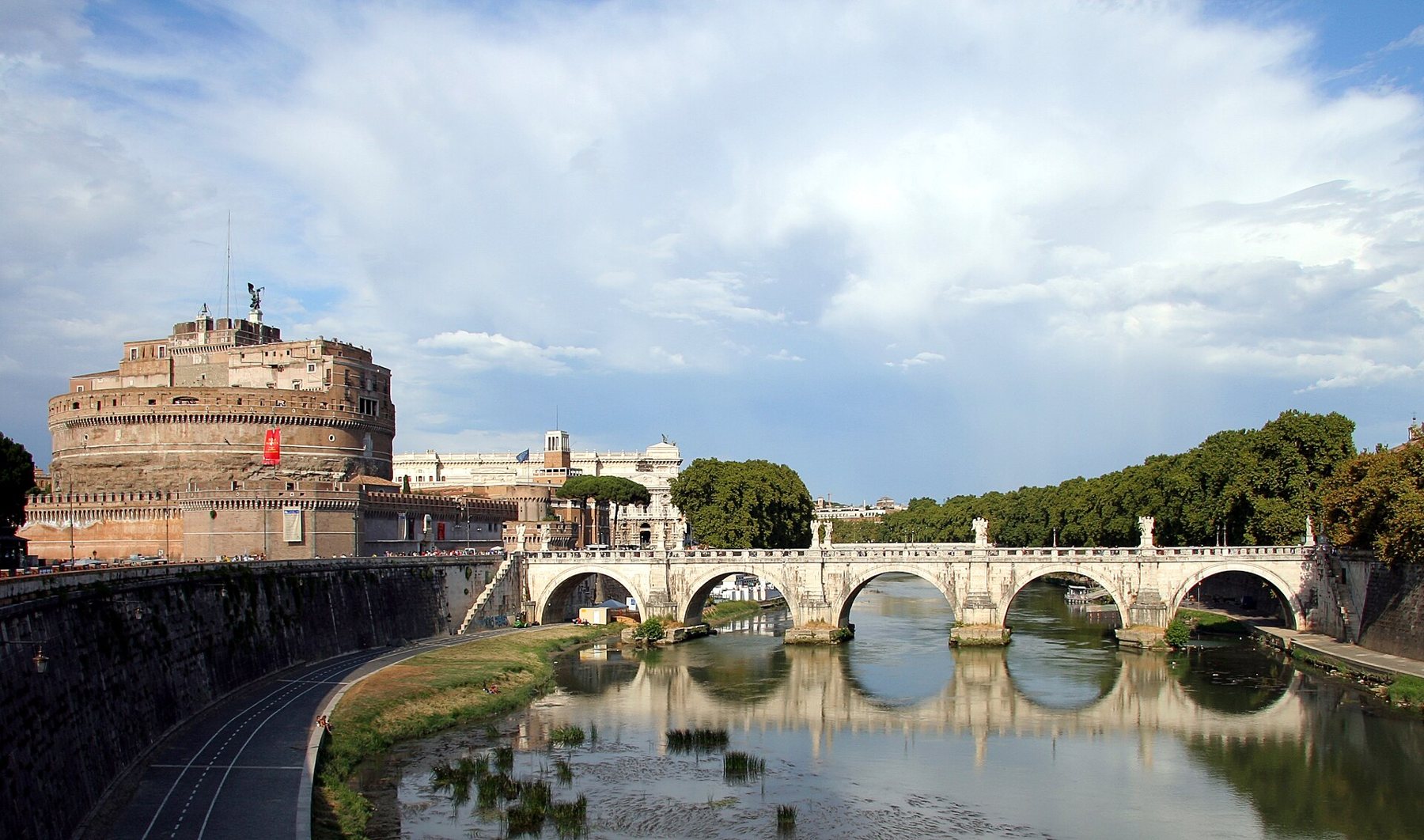
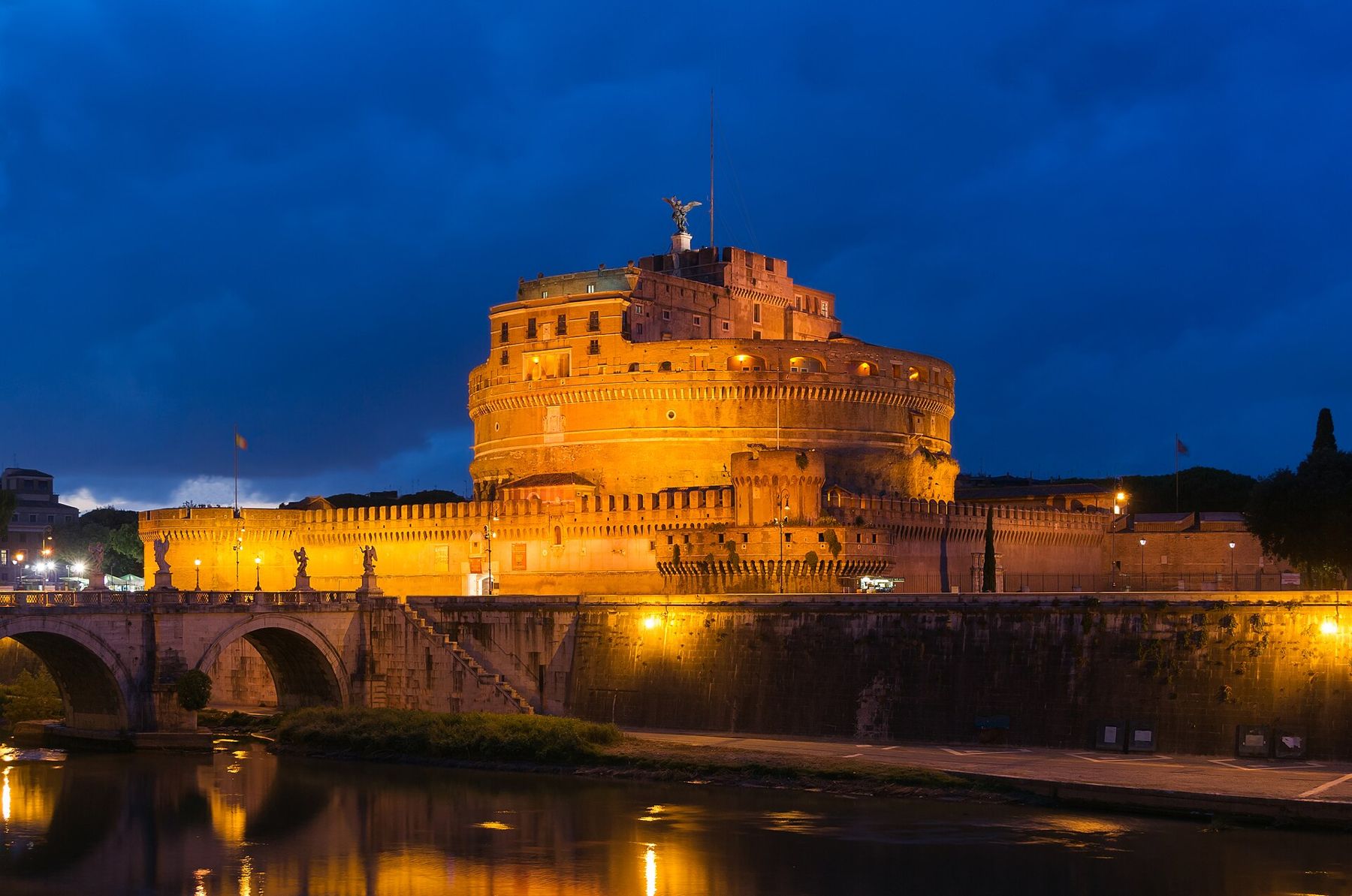
From the river it looks like a drum of brick and stone with a bronze angel on top, and it has been many things: an emperor's tomb, a corner of the city walls, a papal fortress, a prison, a barracks and now a museum. You climb through all of those lives in about two hours, from a Roman ramp in the dark at the bottom to an open terrace at the top, and in the late afternoon you come out into the best light of the day, looking straight at the dome of St Peter's.
Opening days and hours vary with the season, and there are occasional free days that bring crowds; check them on the official site before you go.
An emperor's tomb by the river
The emperor Hadrian built the mausoleum in the 130s AD for himself and his family, on the far bank of the Tiber, and built a bridge to reach it, the ancestor of today's Ponte Sant'Angelo. It was a great cylinder faced with marble and topped with earth, trees and statues. Later emperors were buried here too. The marble has long gone, stripped for other buildings, but the core you see today is still Hadrian's.
The name comes from a legend. In 590, during a plague, Pope Gregory the Great is said to have seen the Archangel Michael on top of the tomb, sheathing his sword as a sign that the plague was over. From then on it was the castle of the holy angel.
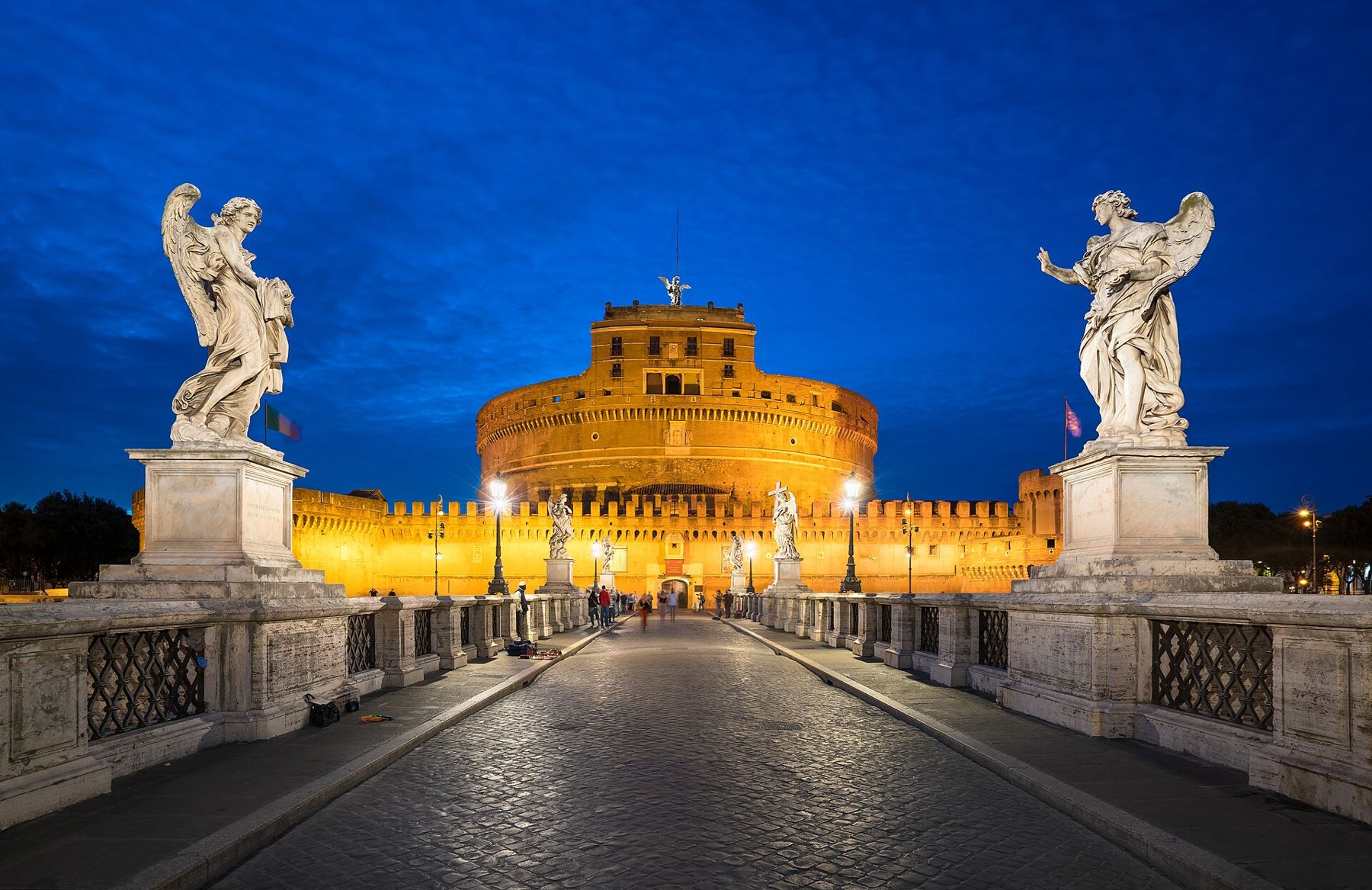
Come in from the river side, crossing Ponte Sant'Angelo with its marble angels if you are walking from the centre, or along the river walk from the Vatican side. The entrance is on the river front, facing the bridge.
Up the Roman ramp
Inside, the first part of the climb is the most ancient. A broad brick ramp spirals gently upward inside the thickness of the tomb, lit only by a few shafts from above. It was built for the funeral processions that carried the emperors' ashes to their chamber, and you walk where they walked. The floor still has traces of mosaic in places, and the brick walls once carried marble facing.
The ramp brings you to the funerary chamber at the centre of the mausoleum, a tall, bare room where the urns once stood. A bridge across it, added much later, shows how the building was adapted for defence: the ramp could be cut off so that attackers could not reach the upper floors.
Take the ramp slowly and let your eyes adjust. It is cool in here even on a hot afternoon, and quiet, since most visitors hurry upward towards the views. Look up at the light shafts as you pass: they were the only daylight the procession had on its way to the chamber, and they still are.
Courtyards, cannonballs and the old angel
From the chamber, stairs take you up into the open, into the Courtyard of the Angel. Here stands the marble angel that topped the castle before the present bronze one, its wings made of bronze. Around the courtyards you find heaps of stone cannonballs, small chapels, and the rooms where the castle's garrison lived and stored its weapons.
The fortress grew over the centuries. The Aurelian walls of the city took in the tomb as a bastion in the third century, medieval popes built on top of it, and in the fifteenth and sixteenth centuries the bastions at the corners were added. The castle was linked to the Vatican by a covered wall walk, the Passetto di Borgo, along which more than one pope fled to safety, most famously Clement VII during the Sack of Rome in 1527. You can see its line from the upper levels, and follow it on the ground in the Borgo and the wall the popes ran along.
12:30Another hourPrati at lunchtime: wide streets, cool churchesThe papal apartments
Higher up the mood changes completely. Popes who had to shelter here wanted to live well, and the apartments built for Paul III in the sixteenth century are painted from floor to ceiling with grotesques, mythological scenes and stories of Alexander the Great. In the largest hall, look for the painted figure of a courtier stepping through a painted door, a joke for guests who had just come in through a real one.
Around these rooms you pass the treasury, a round room in the core of the mausoleum where papal funds were kept in great iron-bound chests, and the library, with its rich ceiling. Further on are the cells where the castle held its prisoners. The goldsmith and sculptor Benvenuto Cellini was one of them, and wrote about his escape.
The loggias that open off the apartments are the first places where you look out: one towards the river and the centre, another over the Prati side. Take a moment at each. The light is warmer every minute after four.
The light is warmer every minute after four.
Under the bronze angel
The last stairs take you onto the terrace at the very top, beneath the bronze statue of Michael sheathing his sword, made in the eighteenth century. This is the terrace where Puccini set the last act of Tosca, and where his heroine throws herself from the parapet. Walk round the whole circuit slowly.
To the west, along the straight line of Via della Conciliazione, rises St Peter's, its dome dark against the sky in the afternoon. Below, the Tiber curves past, with the bridges stepping across one after another and the river walks along the bottom of the embankments. To the east are the roofs and domes of the centre, and on a clear day the hills beyond.
If you came earlier from the climb up the dome, this is the view the other way round: you looked down at this round castle from up there, and now the dome looks back. Stay as long as you like; the terrace is rarely crowded in the late afternoon.
Leaving at the golden hour
Allow two hours for the whole visit, and plan to reach the terrace about an hour before sunset. There is no dress rule, but the visit is mostly stairs and ramps; if steps are hard for you, ask at the entrance what can be reached.
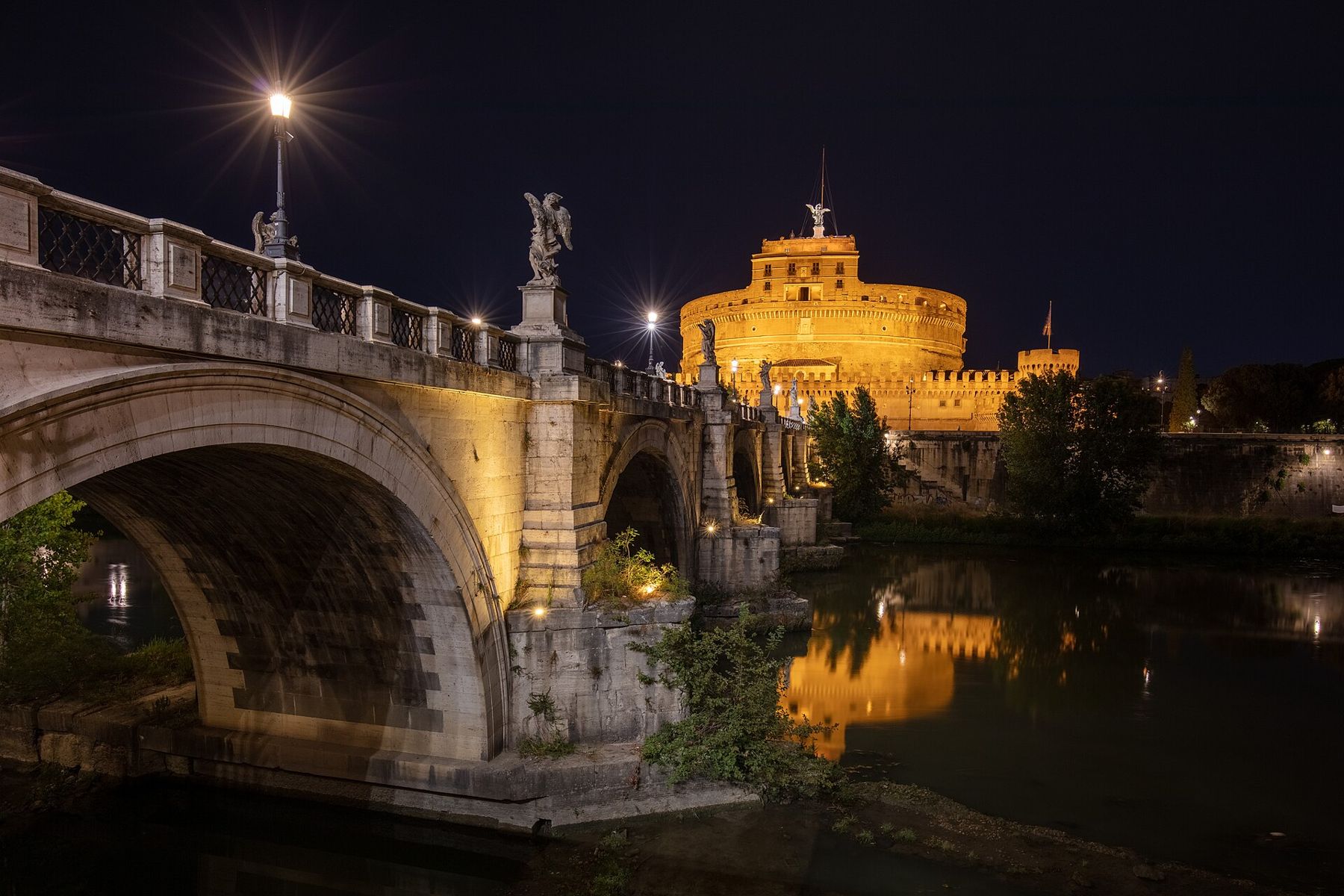
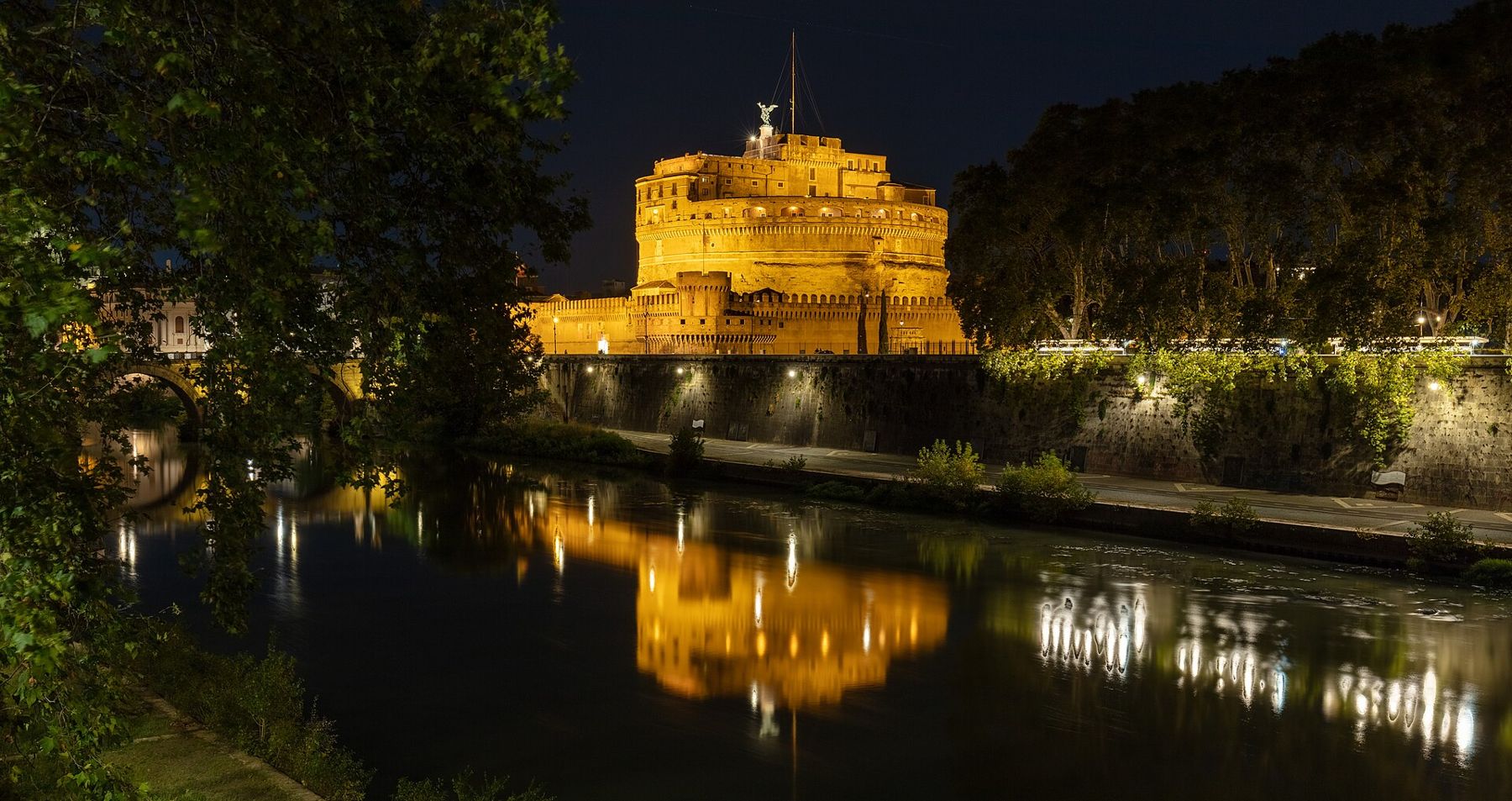
When you come out, the bridge in front of you is at its best as the light goes. Cross it towards the centre, or turn back along the river to St Peter's and see the square as it empties: the basilica at opening time and the square at dusk are two different places. Later in the evening, come back to the bridge for the angels lit up and the castle glowing above the water.
The photographs on this walk are credited by name and licence in I fotografi. The other walks are on the list of hours.
Later the same day
- Down the Lungara into Trastevere for the mosaics
- Up the Gianicolo for the last light
- Ponte Sant'Angelo after dark
- Dress, days and bags: the rules of a Vatican morning
- Getting to the Vatican side: metro, tram and on foot
- St Peter's while the square is still empty
- Across the river: the Aventine keyhole at opening time
- Up the dome of St Peter's, step by step
- The Museums, in an order that keeps you sane