Down the Lungara into Trastevere for the mosaics
Leave the Vatican by its back road, an old straight street under the Janiculum, and arrive in Trastevere as the churches reopen and the gold in the apses starts to glow.
No queues for the churches, but Piazza di Santa Maria fills up from about seven; Mass may be under way, so go quietly.
 17:30
Most people reach Trastevere from the other side, over the bridges from the historic centre. Coming from the Vatican you can do something better: walk the whole way along Via della Lungara, the long straight street laid out in the early sixteenth century to link the Borgo with Trastevere under the slope of the Gianicolo. It is level, quiet and about a kilometre long, and it delivers you at the right hour to one of the oldest churches in Rome dedicated to the Virgin.
Allow two to three hours at an easy pace. Start around half past five, when the heat has gone out of the day and the churches of Trastevere are reopening after their afternoon break. Opening times vary from church to church and by season, so check the ones you most want to see before you set out.
Through Porta Santo Spirito and down the Lungara
Begin at Porta Santo Spirito, the heavy unfinished gate just south of the Borgo, where the walls of the papal city once closed off the road to the south. Step through it and you are on Via della Lungara. The street is a strange mix: a large prison on the river side, set in a former convent, then garden walls and palace fronts, then the entrance to the botanic garden on a small square. Traffic is light, and the Janiculum rising on your right keeps most of the street in shade by this hour.
About halfway along, two buildings face each other across the road. On the right is Palazzo Corsini, a long eighteenth-century palace that holds part of the national collection of old master paintings; the botanic garden climbs the hill behind it. On the left, set back behind a gate and a garden, is the Villa Farnesina.
Agostino Chigi's villa
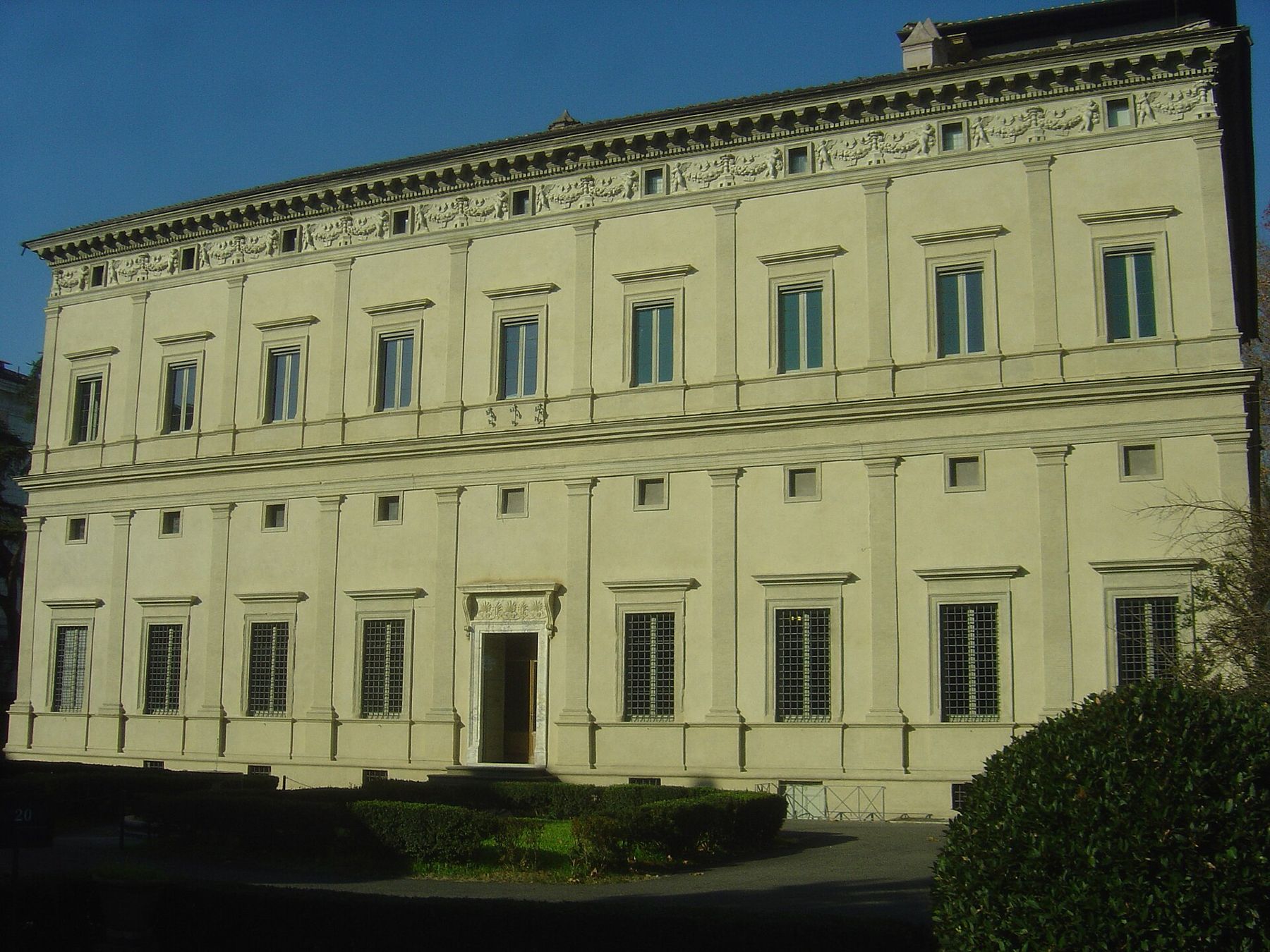
The Farnesina was built between about 1506 and 1510 for Agostino Chigi, a banker from Siena who was for a while the richest man in Rome. His architect was Baldassarre Peruzzi, and the building is one of the first true villas of the Renaissance: two storeys, simple pilasters, a frieze of putti and garlands under the roof, and an open loggia facing the garden, now glazed.
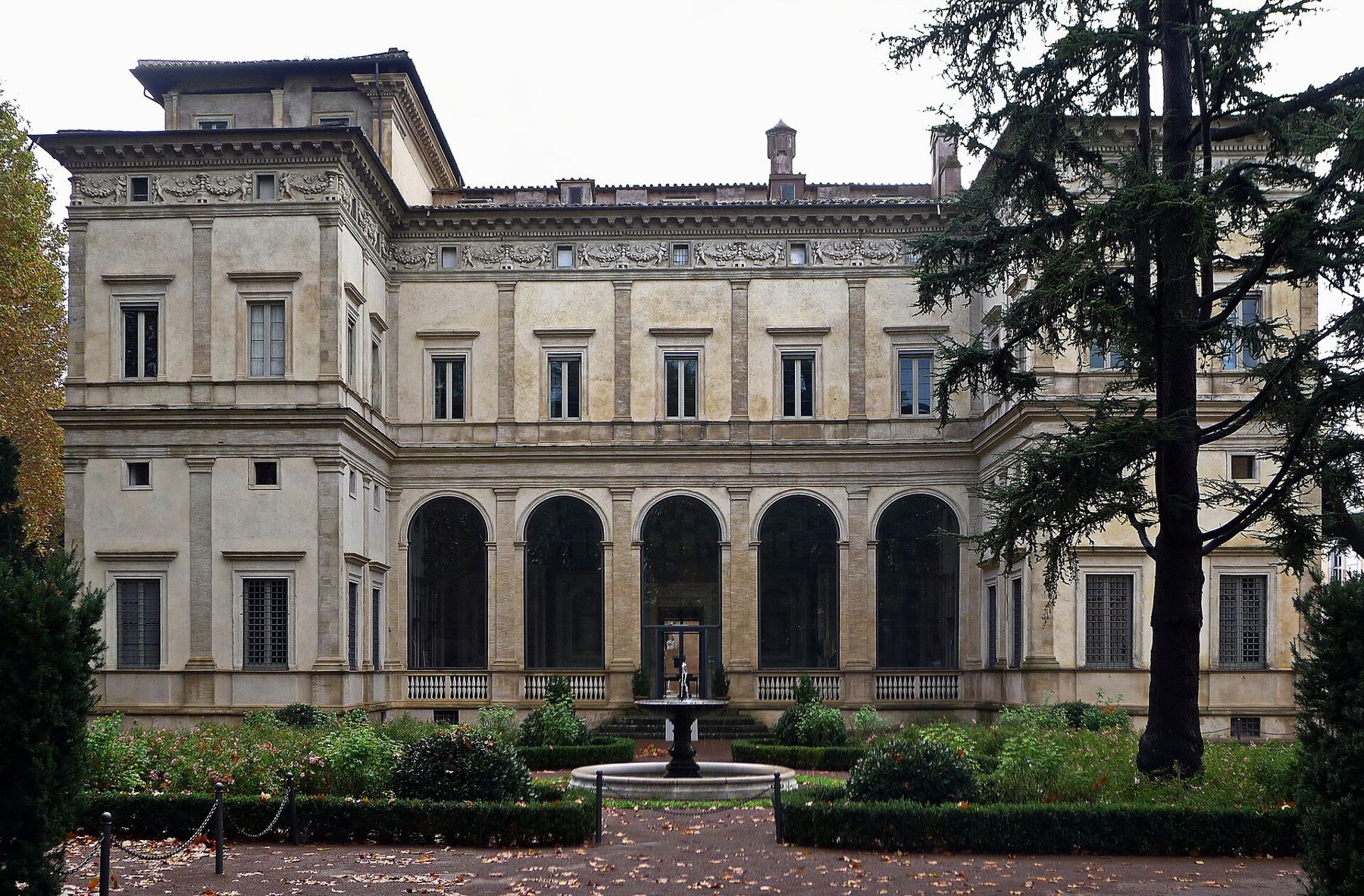
Inside are frescoes by Raphael and his circle, among them the Triumph of Galatea and the loggia of Cupid and Psyche, and Peruzzi's painted room of false columns and views. The villa keeps short hours, usually in the morning and early afternoon, so by the time you pass on this walk the doors are likely to be closed. That is no great loss today. You can see the garden front from the gate, and the frescoes make a fine morning on another day.
Porta Settimiana and into the lanes
The Lungara ends at Porta Settimiana, a gate in the Aurelian Walls, rebuilt at the end of the fifteenth century with a battlemented top. Pass under it and the city changes at once. The straight road gives way to the lanes of Trastevere: cobbles, ivy on the walls, washing on lines, small squares that open and close as you walk.
07:30Another hourAcross the river: the Aventine keyhole at opening timeTake Via della Scala, which bends gently south-east past the church of Santa Maria della Scala. If it is open, step into its dim interior; it is a working Carmelite church and usually quiet. Keep going through Piazza di Sant'Egidio and a short lane brings you out into Piazza di Santa Maria in Trastevere, with its fountain in the middle and the church filling the far side.
This is the hour when the square is at its best. Families come out, children chase pigeons round the fountain, and the upper floors of the houses glow orange. Look up at the facade of the church: a band of mosaic under the roof shows the Virgin nursing the Child, with a procession of women carrying lamps on either side. In the evening, when the facade is lit, the gold catches the light from the square.
The gold apse of Santa Maria
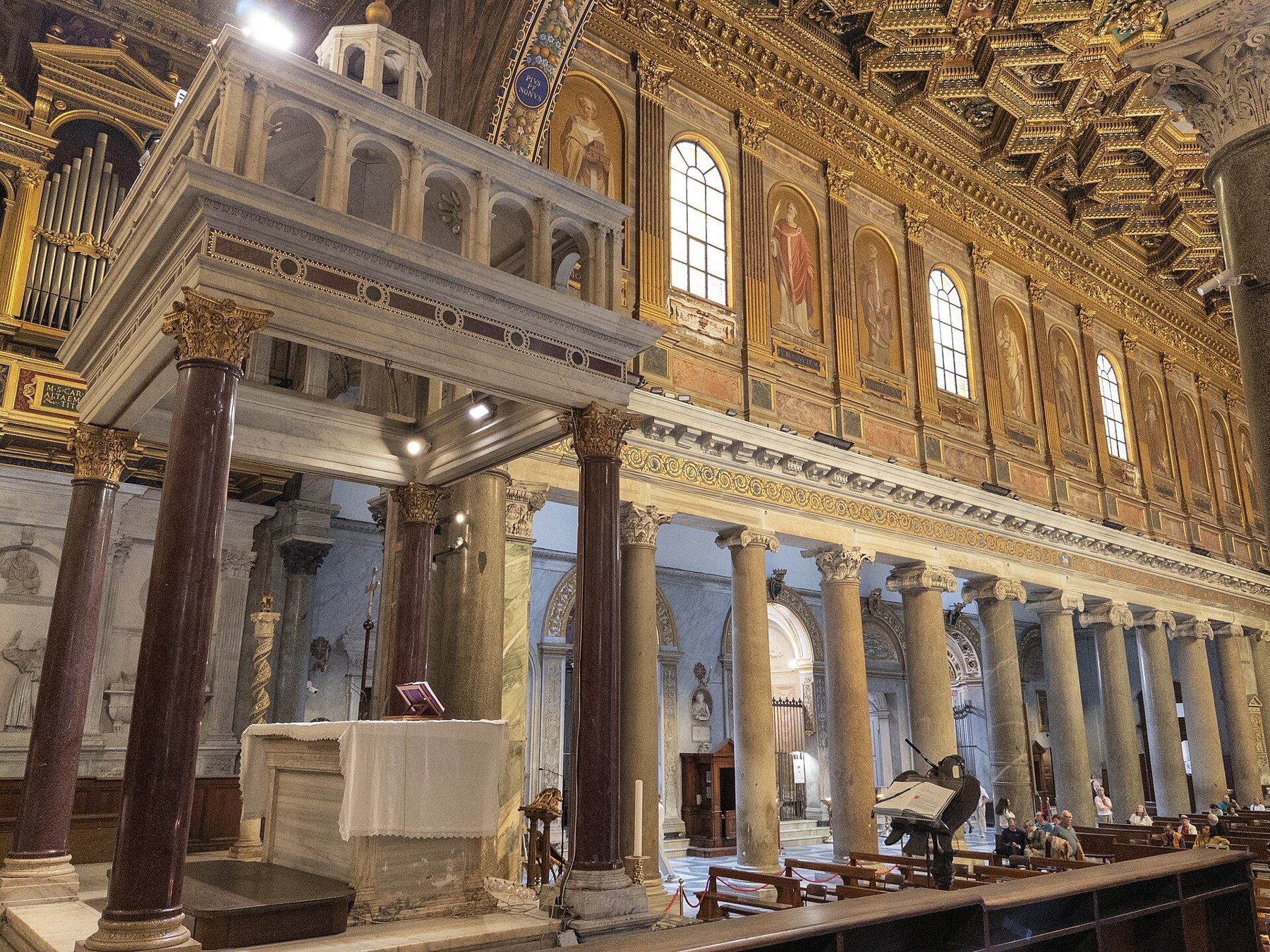
Go in through the portico, where fragments of ancient inscriptions are set into the walls, and the church opens out ahead of you. Two rows of great granite columns, taken from older Roman buildings and not all matching, lead down the nave under a gilded wooden ceiling. In the evening the nave is half dark, and everything draws you towards the apse.
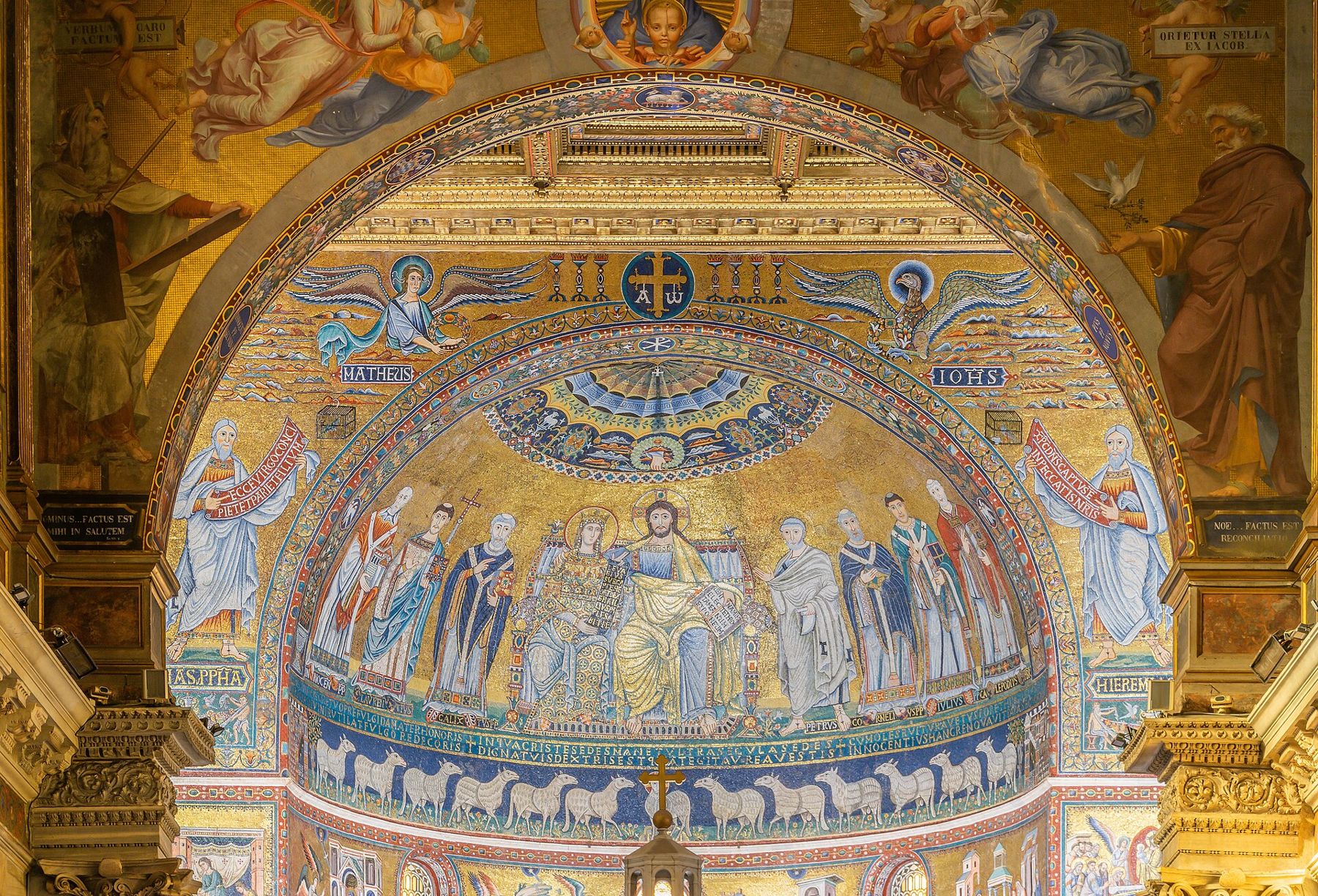
The apse mosaic dates from the twelfth century. At its centre, Christ and his mother sit side by side on one throne, his arm round her shoulders, a rare and tender arrangement in mosaics of this age. Saints and popes stand on either side, among them the pope who rebuilt the church, holding a model of it. Below them a line of sheep walks in from two small cities towards the Lamb in the middle.
Below them a line of sheep walks in from two small cities towards the Lamb in the middle.
Lower down, between the windows, is a second series of mosaic panels made at the end of the thirteenth century by Pietro Cavallini: scenes from the life of the Virgin, from her birth to her death, set in buildings that already show depth and weight. Walk up close, as far as the rail allows, and take them one by one. If Mass is being said, wait at the back; the apse will still be there in twenty minutes.
Bring a few coins. In some Roman churches the lights that illuminate the mosaics or side chapels work on a coin box, and a minute of full light shows you colour you would never see in the half-dark.
Across Viale di Trastevere to Santa Cecilia
If you still have time and energy, cross the broad Viale di Trastevere into the quieter eastern half of the district. Ten minutes' walk through lanes that are more residential and less busy brings you to Santa Cecilia in Trastevere, entered through a courtyard garden with a large antique vase at its centre.
The reason to come is under the high altar: Stefano Maderno's marble statue of Cecilia, carved in 1600, shows the martyr lying on her side, her head turned away, the cut on her neck visible. It is small, plain and very moving. Above, the ninth-century apse mosaic has Christ with saints against a deep blue ground. Cavallini also painted a Last Judgment for this church, now in the nuns' choir upstairs, which can be seen only at limited times; check before you count on it.
From Santa Cecilia it is a few minutes to the river. If you want the last light, it is a climb back up to the ridge of the Gianicolo for sunset. If you would rather head home along the river, follow the Lungotevere north towards the angels on the bridge, lit up after dark, with the Borgo and its papal wall beyond.
The photographs on this walk are credited by name and licence in I fotografi. The other walks are on the list of hours.
Later the same day
- Up the Gianicolo for the last light
- Ponte Sant'Angelo after dark
- Dress, days and bags: the rules of a Vatican morning
- Getting to the Vatican side: metro, tram and on foot
- St Peter's while the square is still empty
- Across the river: the Aventine keyhole at opening time
- Up the dome of St Peter's, step by step
- The Museums, in an order that keeps you sane
- Under the floor: the grottoes and the necropolis