St Peter's while the square is still empty
Come before the groups and the basilica runs at the pace of a parish church: a few Masses at side altars, sweepers in the square, and room to stand in front of the Pietà.
At opening the security line under the colonnade is short; by mid-morning it can bend round the square. Wednesdays and feast days run differently.
 07:00
The basilica opens early, well before the Vatican Museums, and for the first hour or so it belongs mostly to people who came to pray. Opening times shift with the season and with papal ceremonies, so check them on the official site the evening before. Then aim to be in the square as the doors open: the light is good, the queue is short, and you see the building the way it was meant to be approached, slowly and from a distance.
Into the arms of the colonnade
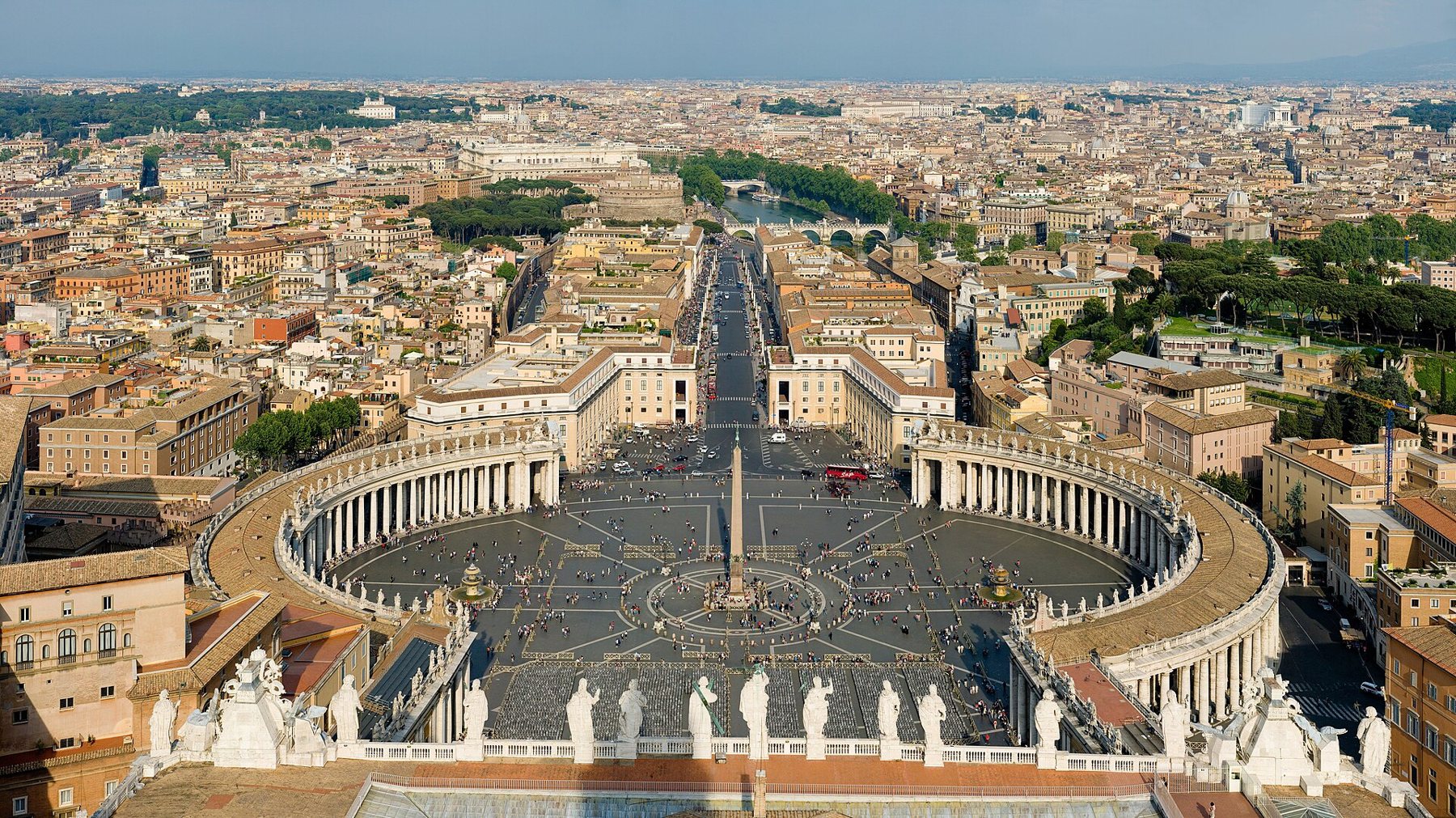
Walk in from the end of Via della Conciliazione rather than from the side streets. The square opens in front of you in two curves of travertine columns, four rows deep, with a line of saints along the top. Gian Lorenzo Bernini built the colonnade between 1656 and 1667 and described it as the arms of the Church reaching out; at seven in the morning, with the paving still damp from the street cleaners, that is very much how it feels.
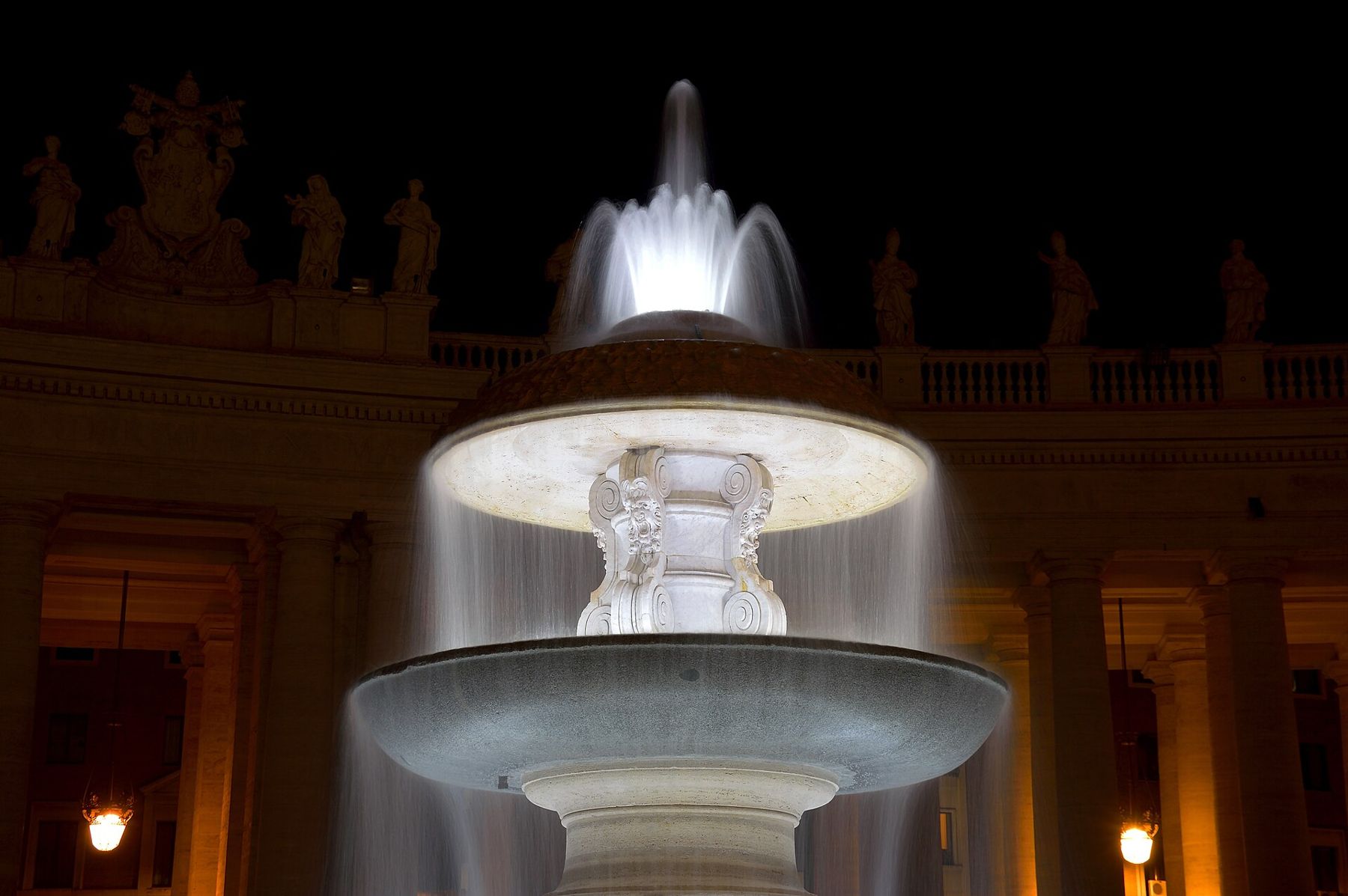
In the middle stands the obelisk, an Egyptian monolith that has been in Rome since antiquity and was dragged to this spot in 1586. On either side is a fountain, the second made to match the first. Between the obelisk and each fountain, look down for a round stone disc set in the paving. Stand on it and turn towards the nearest arm of the colonnade: the four rows of columns line up behind one another and the curve seems to be a single row deep. It takes ten seconds and almost nobody does it.
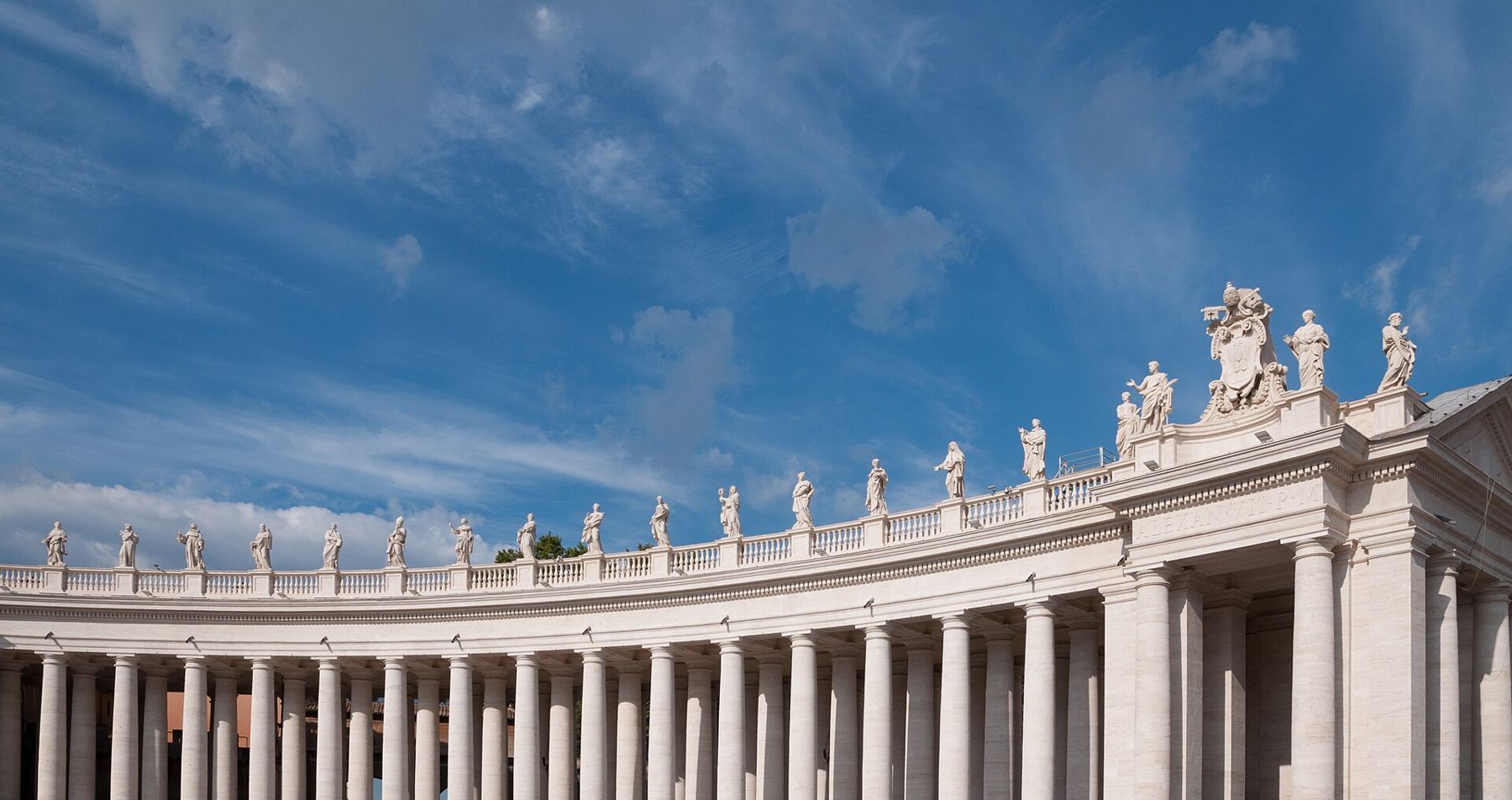
The square itself is not quite level and not quite empty even at dawn. You will see clergy crossing with briefcases, a few runners, the barriers already stacked for the day, and possibly a stage being built if a large ceremony is coming. That is part of the point: this is a working place, and the morning shows its workings.
Security, and the dress check
Everyone entering the basilica goes through a security check with scanners, set up under the colonnade. Follow the barriers; the line is usually on one side and moves quickly at this hour. Large bags, knives and anything that looks like a tool will be turned away, and there is no point arguing about a corkscrew. The full list of rules is in our page on dress, days and bags.
After the scanners there is often a second, less formal check at the steps: shoulders and knees covered, for men and women alike. Shorts that end above the knee and sleeveless tops will be sent back. A light scarf folded in a pocket solves most problems.
The porch and the Pietà
Climb the steps into the portico. The facade above you is Carlo Maderno's, broad and flat, with Christ and the apostles standing on the balustrade. Of the five doors, the far right is the Holy Door, walled up or locked between Holy Years and opened only for a Jubilee. The central bronze doors are older than the present church and were brought over from the earlier basilica on this site.
Once inside, turn right at once. The first chapel holds Michelangelo's Pietà, carved when he was in his early twenties: the dead Christ lying across his mother's knees, Mary young and calm, the marble polished until it looks soft. It sits behind protective glass and you cannot get close, so give your eyes a moment to adjust to the distance. Look for the band crossing Mary's chest, where he cut his name, the only work he is known to have signed.
In the early morning you may have it almost to yourself for a minute or two, which later in the day is impossible.
In the early morning you may have it almost to yourself for a minute or two, which later in the day is impossible. Do not linger longer than the people behind you would like; you can always come back to it on the way out.
Down the nave, slowly
Now go back to the centre and simply walk. The nave is so well proportioned that its size takes a while to register. A few clues help. Just inside the central door is a round slab of red porphyry in the floor, where tradition says Charlemagne knelt to be crowned in the year 800. Further along, bronze lettering set into the marble marks how far other great churches of the world would reach if they stood inside this one. The cherubs holding the holy water stoups look small from the door; standing beside them, you find they are taller than you are.
08:30Another hourThe Museums, in an order that keeps you saneMost of what look like altar paintings are in fact mosaics, made so they would not decay in the damp. On the right-hand side, close to the crossing, sits the bronze statue of St Peter on his throne. One foot has been worn smooth by centuries of hands and lips, and in the morning you will see people pause, touch it and move on without fuss.
At this hour Masses are being said at side altars, often in several languages at once, and one chapel on the right is set aside for prayer only. Keep your voice down, keep the camera away from people at prayer, and walk round a service rather than through it. Ropes appear and disappear as the morning goes on; go with them.
Under the dome, at the altar of the baldacchino
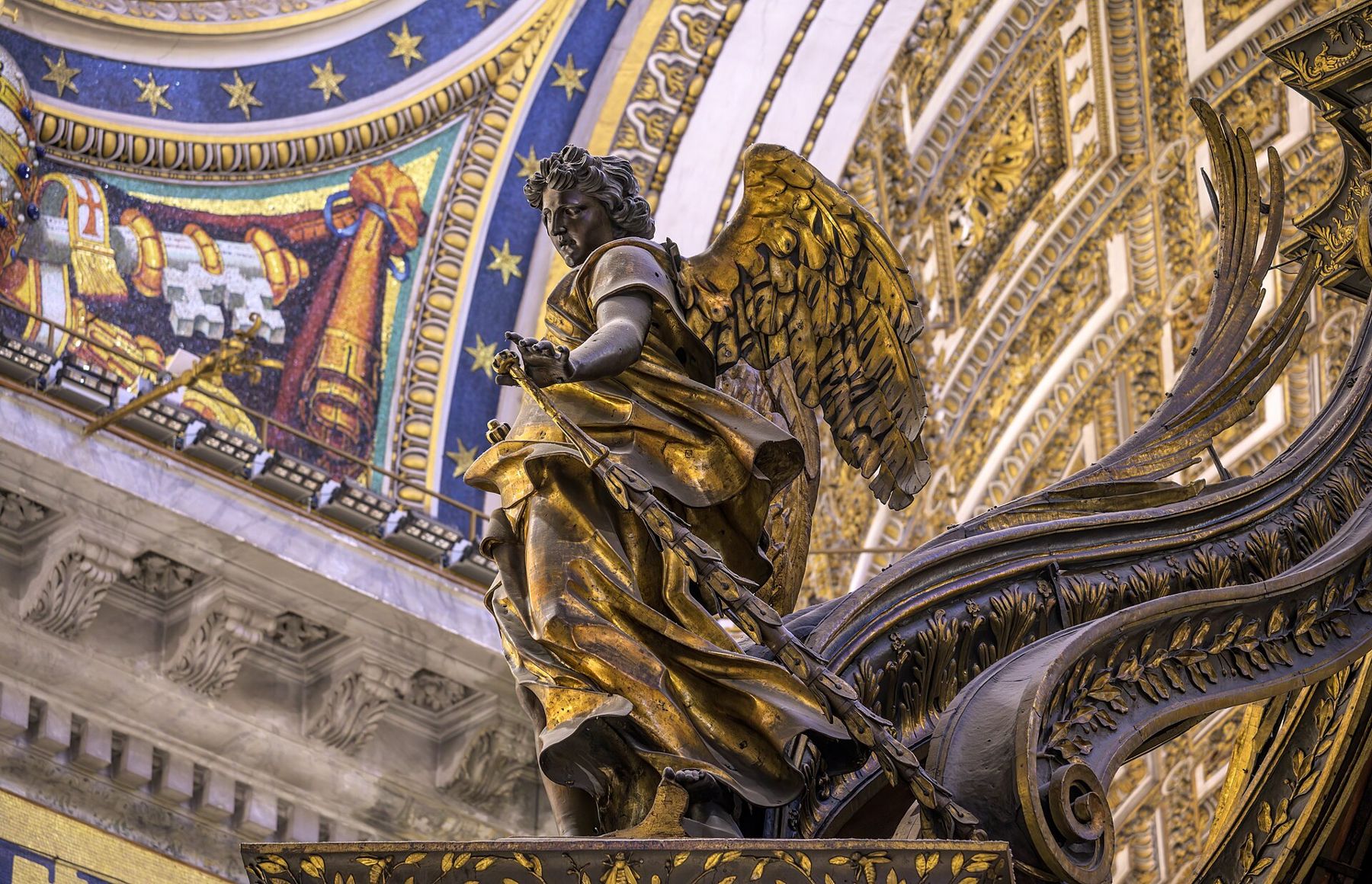
The nave ends at the crossing, and everything is arranged to bring you to this point. Over the papal altar stands Bernini's baldacchino, a bronze canopy on four twisting columns, with angels at its upper corners and bees, the emblem of the Barberini family, crawling over the bronze. Directly below, beneath the altar and the floor, lies the place venerated as the tomb of St Peter; the open, railed space in front of the altar, the confessio, leads the eye down towards it.
Now look up. The dome rises over the crossing with the Latin text of Christ's words to Peter running in huge letters round its base. If you plan to climb it, this is the view to remember: in an hour you can be looking down at this same floor from the gallery up there, as we describe in the climb up the dome.
Straight ahead, in the apse, is the Chair of St Peter, another Bernini work: a bronze throne held up by four figures of the Fathers of the Church, beneath an oval window of yellow alabaster with the dove of the Holy Spirit at its centre. When the early sun comes through that window, the whole apse turns gold.
From near the crossing, the stairs to the papal tombs lead down under your feet. If they are open, the visit is short and well worth it; we cover it in the grottoes beneath the floor. The route through the grottoes usually brings you out at the side of the basilica rather than back into the nave, so see everything you want inside first.
Back out to watch the square fill
Leave by the main doors and stop at the top of the steps. By now the sun will be higher, the shadow of the facade pulling back across the paving, and the first large groups arriving from Via della Conciliazione behind flags and umbrellas. The security line will have grown. It is a good moment to stand to one side and watch the square do what it was built for, filling up with people from everywhere.
Walk out to one of the fountains for a last look back at the facade, then out through the colonnade. If you want to keep the morning going, the Borgo is directly to your right, and the Museums entrance is a fifteen-minute walk round the walls to the north.
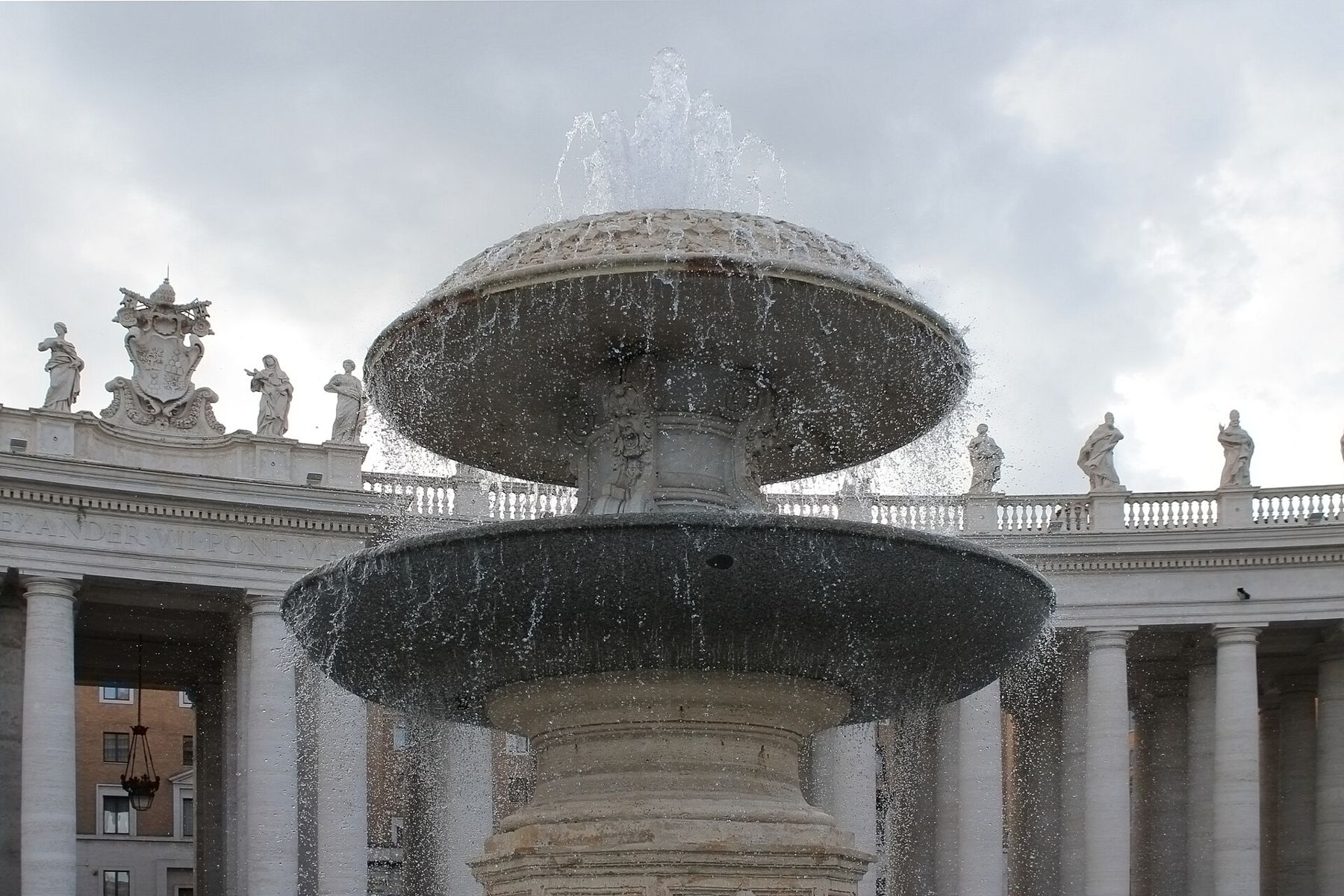
If you are in Rome for more than one day, come back once after dark. The fountains are lit, the colonnade glows a warm yellow, and the square is again nearly empty.
The photographs on this walk are credited by name and licence in I fotografi. The other walks are on the list of hours.
Later the same day
- Across the river: the Aventine keyhole at opening time
- Up the dome of St Peter's, step by step
- The Museums, in an order that keeps you sane
- Under the floor: the grottoes and the necropolis
- Mercato Trionfale, the market by the Vatican wall
- Standing under the Sistine ceiling
- Prati at lunchtime: wide streets, cool churches
- The Borgo and the wall the popes ran along
- Castel Sant'Angelo, from tomb to terrace