The Borgo and the wall the popes ran along
Between St Peter's and the castle lies the Borgo, a pilgrims' quarter cut in half in the 1930s. Follow the high wall of the Passetto through what survives, street by street.
No queues in the Borgo itself; Via della Conciliazione is busy with groups, but the side streets thin out within a block.
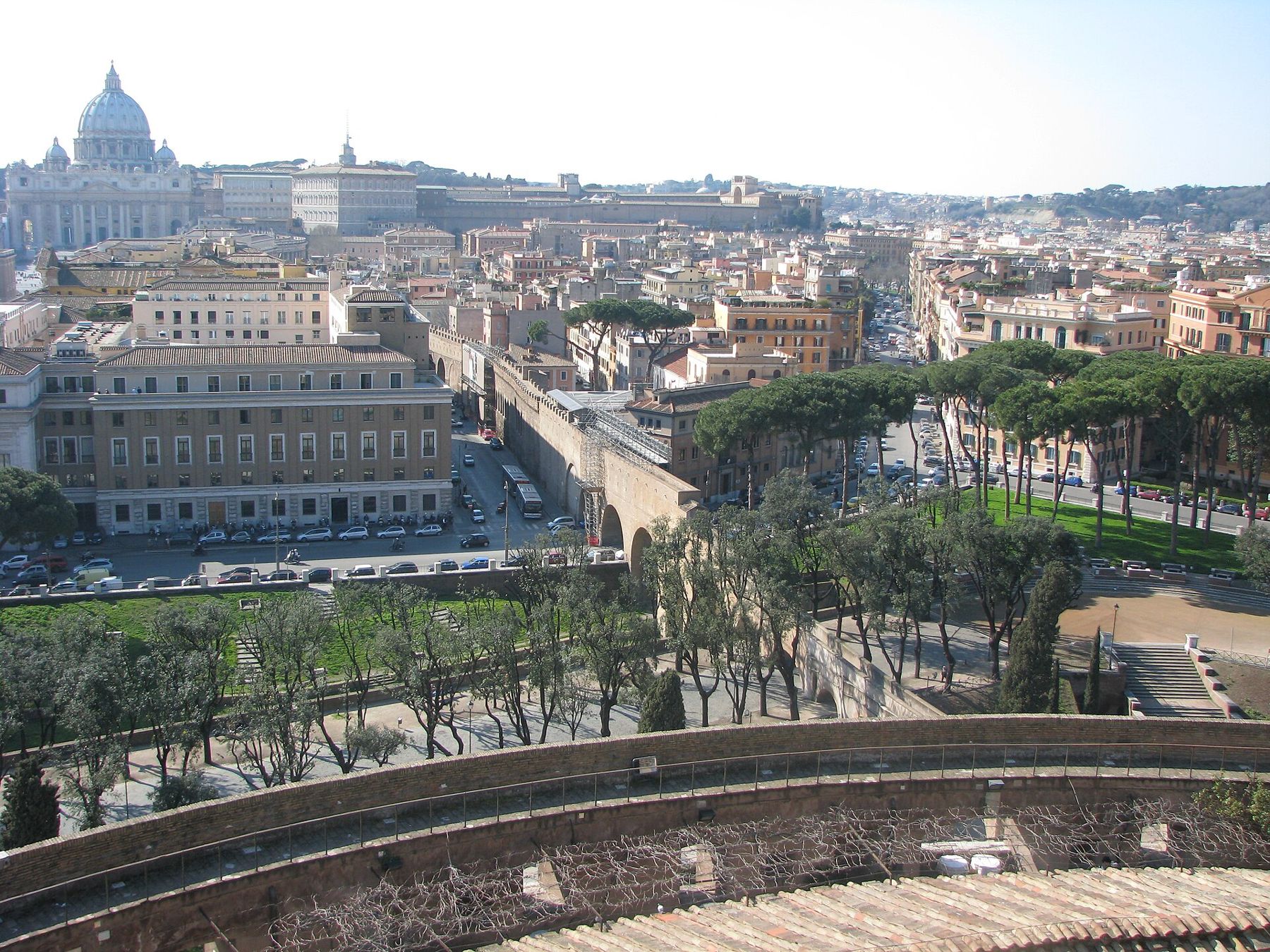 15:00
The Borgo is the old quarter between Castel Sant'Angelo and the Vatican, once a world of its own: lodgings, hospitals and churches for the pilgrims who came to St Peter's, walled off from the rest of Rome on the far side of the river. Much of it was cleared in the twentieth century, but enough is left for a good walk in the shade of an early afternoon, and the thread that holds it together is a wall.
The pilgrims' quarter
The name comes from an old word for a settlement, and the quarter grew up in the early Middle Ages as communities of pilgrims from northern Europe settled close to the tomb of St Peter. The Saxons were among them, and they left their name to a church and a hospital that still stand, Santo Spirito in Sassia.
After Saracen raiders sacked the area around St Peter's in 846, Pope Leo IV ringed the Vatican and the Borgo with walls, and for centuries this was the Leonine City, a fortified suburb with the basilica at one end and the old tomb of Hadrian at the other. Start your walk at that end, by Castel Sant'Angelo, and head west.
Following the Passetto di Borgo
From the castle, a long, high wall runs straight towards the Vatican, its top crenellated, with a covered walkway inside it and an open one on top. This is the Passetto di Borgo, the escape route of the popes. It follows the line of the medieval walls and was rebuilt as a raised passage at the end of the fifteenth century, so that a pope in danger could hurry from his palace to the fortress without setting foot in the street.
More than one pope used it. The most famous flight was in May 1527, when imperial troops broke into Rome in the Sack of Rome and Pope Clement VII ran along the Passetto to the castle while the Swiss Guard fought a rearguard action near St Peter's. The castle held, and he stayed shut inside it for months.
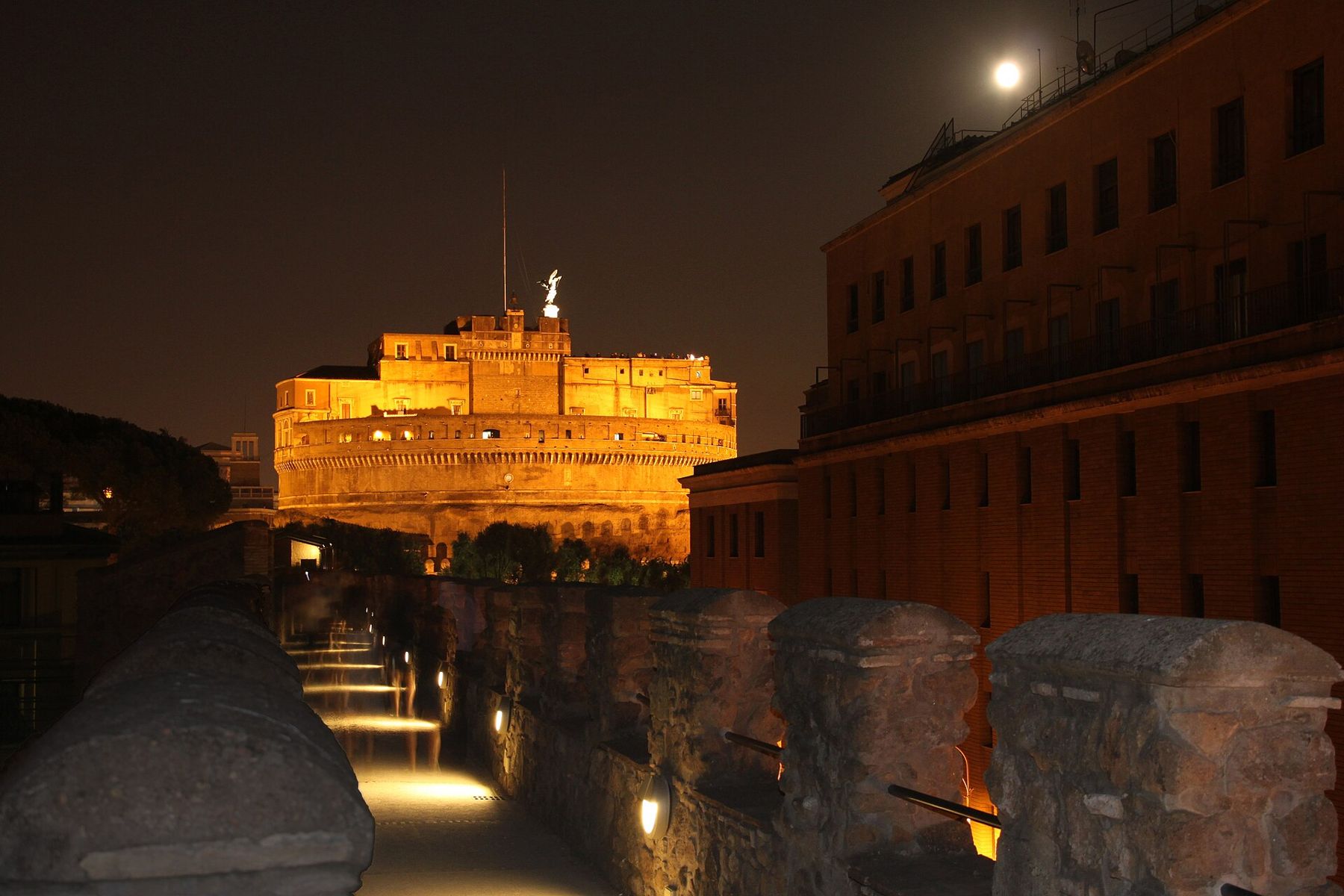
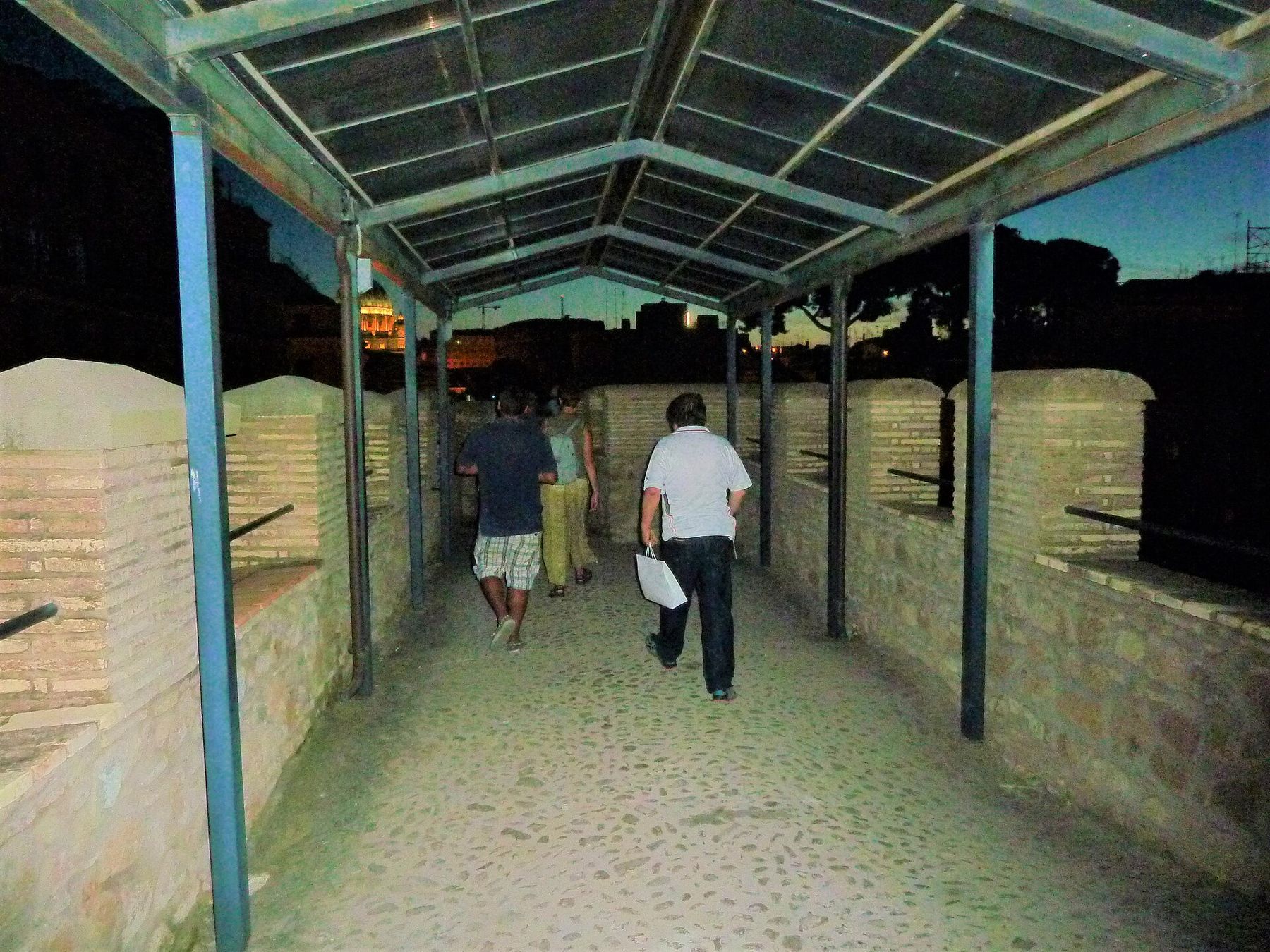
Walk beside it, along Via dei Corridori or Borgo Sant'Angelo, the streets that run at its foot on either side. In places the brick and stone are patched with every century since, and you pass under arches where the cross streets cut through the wall. The walkway itself is opened for guided visits only now and then, usually in summer; if it is open while you are in Rome, take the chance.
Borgo Pio and the streets that survived
Turn through one of the arches into Borgo Pio, the best-kept of the old streets, now closed to traffic. It is lined with low houses painted in ochre and faded red, with small shops for the religious trade and long tables outside at lunchtime, and the dome of St Peter's appears at the end of the side streets as you go. In the early afternoon it is quiet, the shutters half closed.
The streets around it, Borgo Vittorio and the lanes between, keep the old scale of the quarter: narrow, straight, with doorways opening onto courtyards. Notice how the dome is never quite in view and then suddenly is. That effect was once the whole point of arriving at St Peter's.
18:30Another hourUp the Gianicolo for the last lightThe street that replaced the Spina
Until the 1930s, the space between the castle and St Peter's Square was filled by two parallel streets with a block of houses between them, known as the Spina di Borgo, the spine. Pilgrims came up through these narrow streets and stepped out suddenly into Bernini's colonnade, the square opening around them at once.
After the Lateran Pacts of 1929 settled relations between Italy and the Holy See, the government of Benito Mussolini decided to mark the agreement with a grand avenue. The Spina was demolished from 1936, and Via della Conciliazione, the street of the Conciliation, was laid out in its place and finished around the Holy Year of 1950, lined with rows of obelisk-shaped lamp posts.
Walk a stretch of it now and judge for yourself. The view of the dome from the river end is grand and straight, and it is the way most people approach St Peter's in the morning; but the surprise of the colonnade is gone, and some of the buildings along the avenue were moved or rebuilt to fit. A few older palaces survive along it, set back or rebuilt; look at the doorways and courtyards rather than the frontages.
Santo Spirito in Sassia
From the avenue, cut south to Borgo Santo Spirito and the church of Santo Spirito in Sassia, rebuilt in the sixteenth century on the site of the old Saxon church. Its interior is a single wide nave lined with painted chapels, cool after the street. As in all the churches here, cover your shoulders and knees before going in, and avoid visiting during a service.
Beside it stretches the long building of the hospital of Santo Spirito, founded at the end of the twelfth century and among the oldest hospitals in Europe. Look on its walls by the church for the stone wheel set into a window, where babies could once be left anonymously, turned in to the care of those inside. The hospital is still a working hospital, so stay respectful near the entrances.
Where to end
From Santo Spirito the river is a block away. Walk down to the Lungotevere and look back: the wall of the Passetto, the castle and the dome are lined up behind you, the whole Borgo story in one view. Cross to the centre by Ponte Vittorio Emanuele II, or go back to the castle and over Ponte Sant'Angelo as the light goes.
If you started late, the walk is short enough to fit before the castle closes; if you have more time, carry on south along Via della Lungara, the old road towards Trastevere, which also begins near here.
The photographs on this walk are credited by name and licence in I fotografi. The other walks are on the list of hours.
Later the same day
- Castel Sant'Angelo, from tomb to terrace
- Down the Lungara into Trastevere for the mosaics
- Up the Gianicolo for the last light
- Ponte Sant'Angelo after dark
- Dress, days and bags: the rules of a Vatican morning
- Getting to the Vatican side: metro, tram and on foot
- St Peter's while the square is still empty
- Across the river: the Aventine keyhole at opening time
- Up the dome of St Peter's, step by step