Mercato Trionfale, the market by the Vatican wall
A ten-minute walk from the Museums' exit, one of Rome's big neighbourhood markets sells to people who cook every day. Go mid-morning, bring cash and let the stallholder choose.
Busy with local shoppers mid-morning, especially Saturdays; no queue system, so wait your turn at each stall and say who was before you.
 10:00
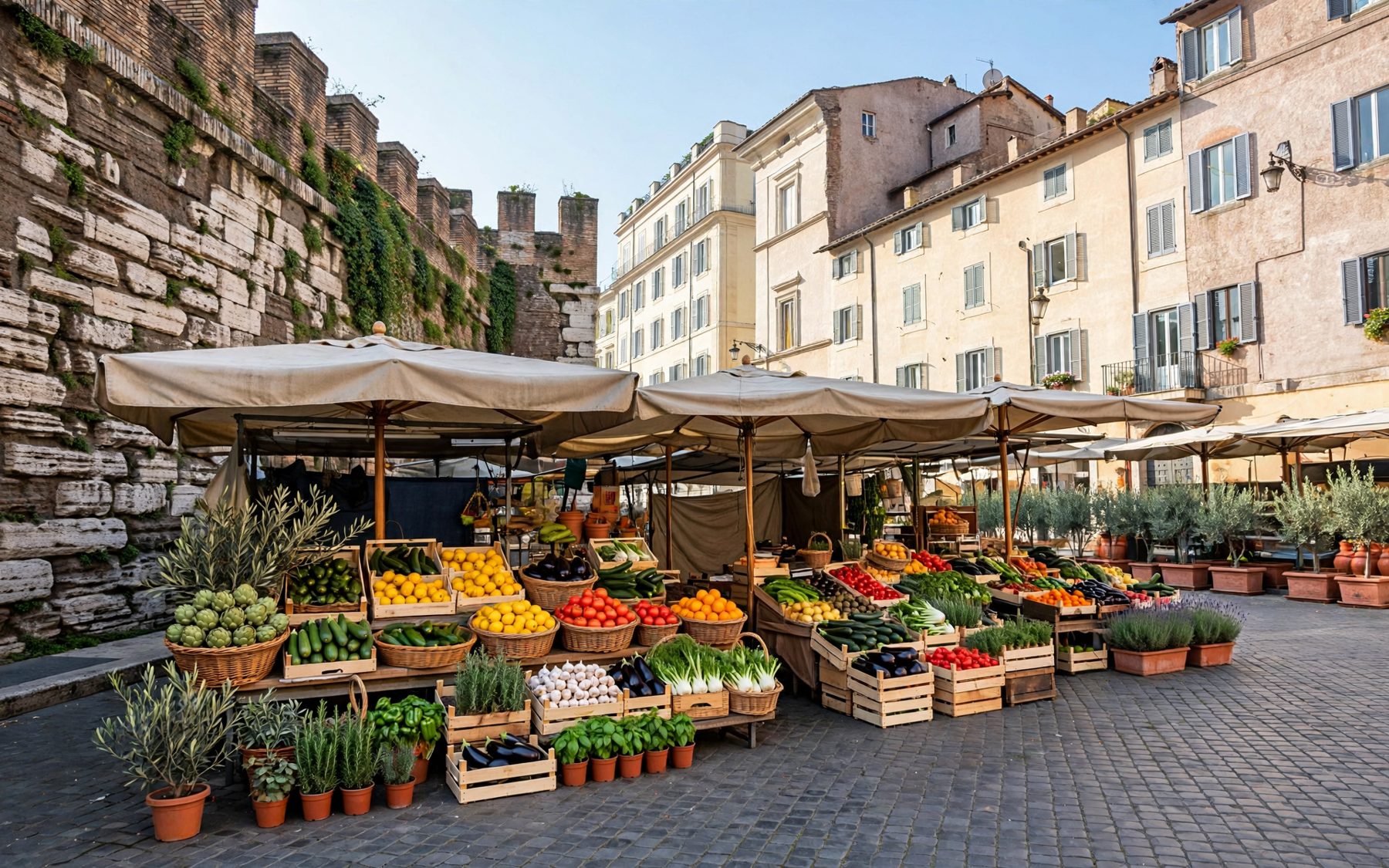
Behind the Vatican Museums, in the streets of the Trionfale quarter just north of Prati, is the market where this part of Rome does its shopping. Mercato Trionfale is a covered market on Via Andrea Doria, a long, low modern building with rows of stalls inside selling fruit and vegetables, fish, meat, cheese, bread, cured meats, dried goods and flowers. It is not a tourist market. Nobody will try to sell you a fridge magnet, and the stallholders will expect you to know roughly what you want.
That is the appeal. Half an hour here tells you more about how Romans eat than any menu, and it puts together the best picnic you will have in the city.
Where it is and when to go
The market sits a few minutes' walk north of the long wall around the Vatican Museums. If you are coming out of the Museums at the end of the morning, walk north through the grid of side streets and you are there in about ten minutes. The nearest metro stops are Cipro and Ottaviano on line A.
It is a morning market. Stalls open early and most start packing up in the early afternoon, though a few stay open longer on some days; it is closed on Sundays and holidays. Ten o'clock is a good time: the deliveries are in, the early rush of regular shoppers has eased, and the stallholders have a moment to talk. Saturday mornings are the busiest and the most fun to watch. Check current days and times before you plan around it, as they do change.
The building replaced the old open-air stalls that once lined Via Andrea Doria itself. Some Romans still miss the street market, but the covered hall is cooler in summer, drier in winter and easier to find your way round.

Finding your way round the hall
The stalls are grouped roughly by trade. Fruit and vegetables take up the most space, with a long sweep of crates and pyramids of whatever is in season. Fish has its own section, with ice and running water, best early in the week and on Fridays. Butchers are together, as are the stalls selling cheese and cured meats, and there are sellers of bread, dried pulses, spices, olives and household goods around the edges.
Take one slow lap before you buy anything. Prices are usually marked on small cards, and you will soon see where the same thing is cheaper or better. The busiest stalls with older customers in line are rarely a mistake.
How to shop without causing offence
A few habits will make you welcome. Say buongiorno when you reach the front, and arrivederci when you leave. Do not pick up or squeeze fruit and vegetables yourself unless the stall clearly has bags and scoops for self-service; at most stalls you point and the stallholder chooses for you, and they take pride in choosing well. Tell them when you plan to eat it, today or in a few days, and they will pick accordingly.
12:30Another hourPrati at lunchtime: wide streets, cool churchesCheese, cured meat and olives are sold by weight, usually in multiples of the etto, one hundred grams. Two etti of pecorino is a generous amount for two people; one etto of prosciutto, sliced thin, goes further than you think. Ask for a taste of a cheese before you commit; it is normal at a counter and nobody will mind if you do not buy that one.
There is no ticket system and no formal queue, but everyone knows who arrived before whom. When the stallholder asks who is next, be honest. Cash in small notes is simplest, although more stalls now take cards.
What to buy, season by season
In spring the stalls fill with Roman artichokes, round and purple-green, sold with long stems, alongside broad beans in their pods, which Romans eat raw with young pecorino, especially around the first of May. Early summer brings cherries and apricots; late summer, figs and tomatoes worth eating on their own. In autumn come chestnuts, mushrooms and the first new olive oil. In winter look for puntarelle, the shoots of a kind of chicory, sometimes sold already cut into curls and soaking in water, to be dressed with anchovy and garlic.
All year, the cheese stalls have pecorino romano, the hard sheep's cheese of the region, fresh ricotta, and buffalo mozzarella brought up from the south. The cured-meat counters sell porchetta, rolled roast pork with herbs, sliced to order; a few slices in a bread roll from the bakery stall is a complete lunch.
Making a picnic of it
Buy bread, a piece of cheese, a few slices of something cured, fruit that can be eaten without a knife, and a bottle of water. Ask the stallholder to slice and wrap; most will. Then you need somewhere to sit.
St Peter's Square and the steps of the basilica are not the place: a picnic there is not welcome, and you may be asked to move on. Better to walk to a park. The gardens around Castel Sant'Angelo, the Parco Adriano, have benches and shade and are a short walk south through Prati; the fortress itself is described in our afternoon at the castle. If you have more energy, take your bag up the Gianicolo ridge and eat under the pines with the city below you.
Fitting it around the Museums
The market and the Museums make a natural pair. If you have an early entry slot, do the Museums first and come here afterwards; you will be hungry, and the market will still be open. If your slot is late in the morning, shop first, then leave your bag at your lodging, because food is not allowed inside the Museums. Our guide to the Museums in a sensible order has more on timing the visit.
The photographs on this walk are credited by name and licence in I fotografi. The other walks are on the list of hours.
Later the same day
- Standing under the Sistine ceiling
- Prati at lunchtime: wide streets, cool churches
- The Borgo and the wall the popes ran along
- Castel Sant'Angelo, from tomb to terrace
- Down the Lungara into Trastevere for the mosaics
- Up the Gianicolo for the last light
- Ponte Sant'Angelo after dark
- Dress, days and bags: the rules of a Vatican morning
- Getting to the Vatican side: metro, tram and on foot