Standing under the Sistine ceiling
The chapel is smaller and busier than you expect, and the guards will hush you. Here is what is on its walls and ceiling, and the order that makes sense of it.
No separate queue: you arrive with the Museums crowd. Late morning is fullest; the last hour before closing is calmer.
 10:30
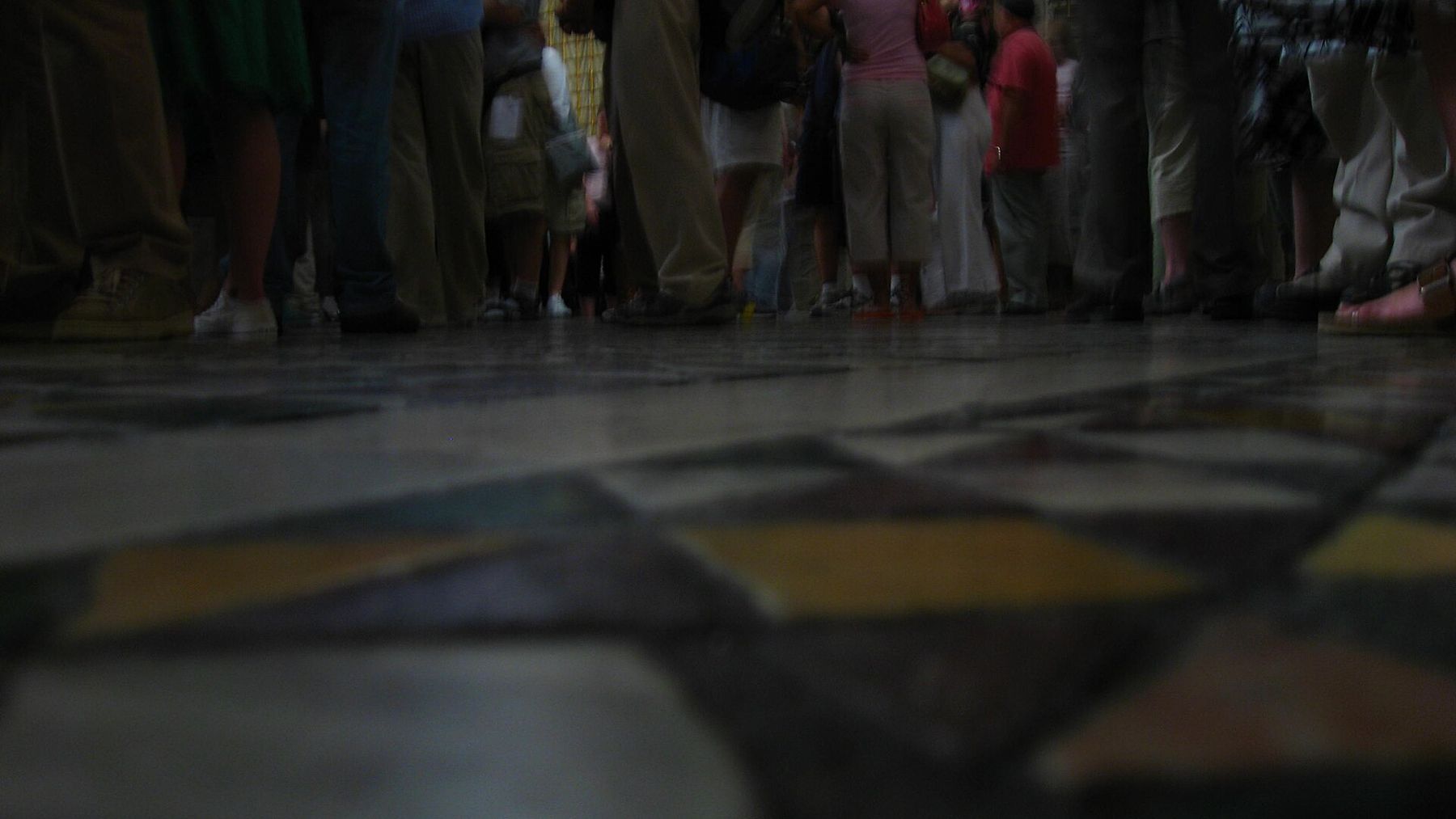
You reach the Sistine Chapel at the end of the Museums route, usually through a small door near the altar end, and the first impression is often of people rather than paintings: a crowded rectangle of floor, everyone looking up, and a guard repeating "silence" and "no photos". Give it a minute. The room is a chapel, still used for papal ceremonies and for the conclave that elects a pope, and it rewards the visitor who stands still and works through it in order.
Rules of the room
There are three, and they are enforced. No photographs or video of any kind, including on phones. Speak quietly, if at all. Keep shoulders and knees covered, since this is a consecrated chapel. There is no fixed time limit for individual visitors, but the guards keep people moving away from the doors, and on busy days the room fills to the point where standing still is an effort.
Benches line the side walls under the windows. If you can find a seat, take it: you will be looking up for a long time, and it is much easier sitting with your back against the wall. A pair of small binoculars helps more than you would think.
Begin at the far end, then turn round
Because you come in at the altar end, the Last Judgment is beside you and the ceiling runs away from you upside down. Walk slowly down the length of the chapel to the end with the main doors, which visitors do not use. Then turn and face the altar.
Now everything is the right way up. The altar wall, with the Last Judgment, is in front of you; the ceiling begins over your head and runs towards it; and the two side walls are on your left and right. From here you can take the chapel in the order it was painted, oldest first.
The walls the popes commissioned first
Before Michelangelo, the chapel was decorated by a team of the best painters of the 1480s, among them Sandro Botticelli, Pietro Perugino, Domenico Ghirlandaio and Cosimo Rosselli. They painted two long bands of large scenes facing each other across the room: the life of Moses on one wall and the life of Christ on the other, matched panel for panel, so that each story from the Old Testament answers one from the New.
Look for Perugino's Delivery of the Keys on the Christ wall: Christ hands the keys to a kneeling Peter in a wide, paved square with a domed temple behind, the clearest and calmest picture in the room. Opposite and nearby, Botticelli's scenes are crowded with figures and movement. Above these bands, between the windows, stand painted portraits of early popes, and below them the walls are painted to look like hanging curtains.
17:30Another hourDown the Lungara into Trastevere for the mosaicsMost visitors never lower their eyes to these walls. They are worth ten of your minutes, and they help you see what was new about the ceiling.
The ceiling, 1508 to 1512
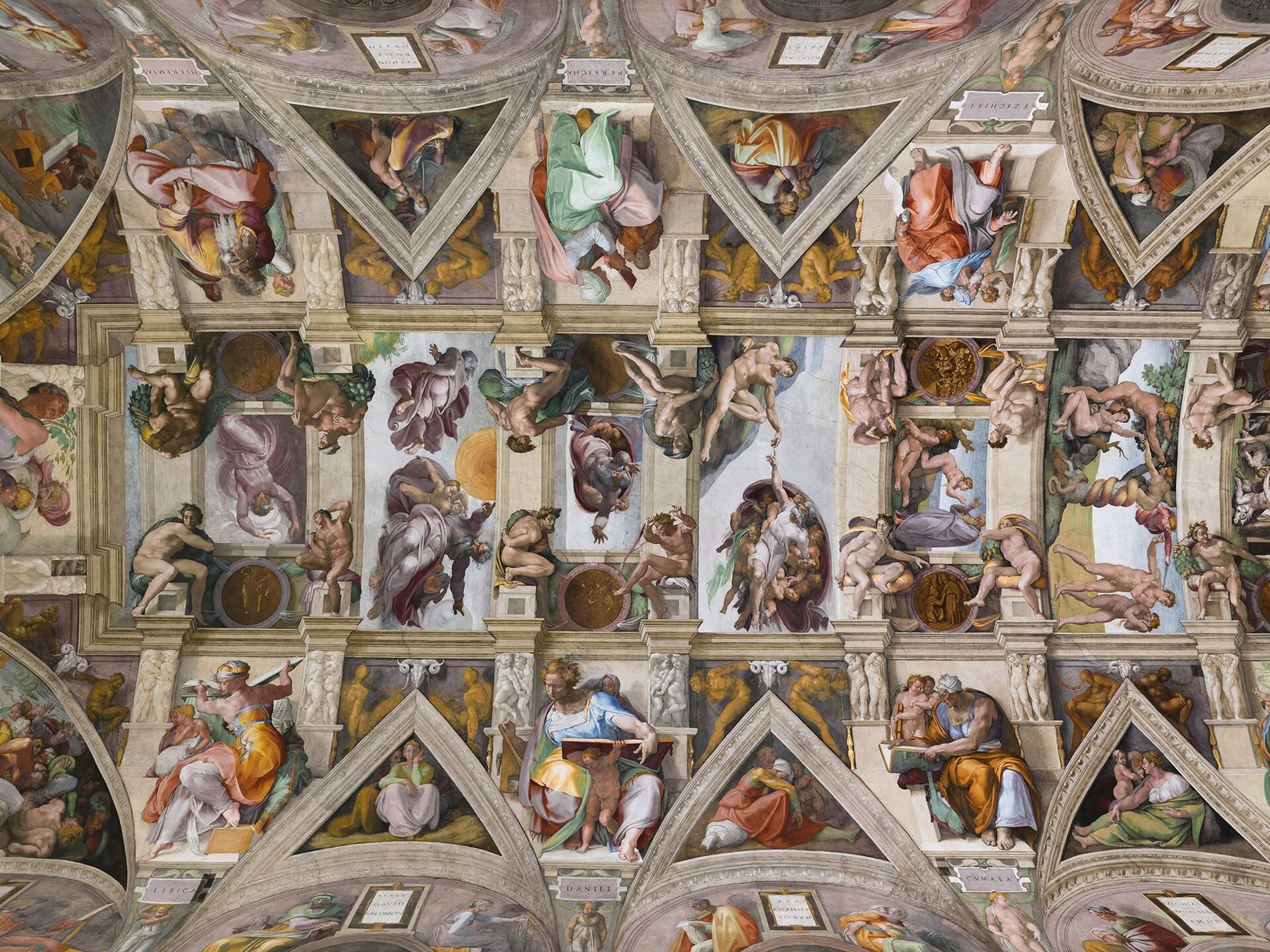
Michelangelo painted the ceiling between 1508 and 1512 for Pope Julius II, standing on a scaffold of his own design. Along the centre run nine scenes from the Book of Genesis, read from the altar end towards the door: God separating light from darkness, the creation of the sun and moon, the separation of land and water, the Creation of Adam, the creation of Eve, the Fall and expulsion from Eden, and three scenes of Noah.
From where you stand facing the altar, then, the story runs backwards over your head. Michelangelo began at the door end with Noah and worked towards the altar, and you can see his figures grow larger and bolder as he went, the scenes simpler, the gestures broader. The Creation of Adam is the fourth panel from the altar: the two hands, almost touching, are smaller than you expect.
Around the central scenes sit the twelve great seated figures of prophets and sibyls, each on a painted throne, with nude youths perched on the painted architecture above them. Over the altar wall, leaning back as if the ceiling were tipping, is the prophet Jonah. In the triangles and lunettes along the edges are the ancestors of Christ, quieter family groups that reward a second look. The colours are bright because of a long cleaning in the late twentieth century, which removed centuries of candle soot.
The Last Judgment, 1536 to 1541
More than twenty years after finishing the ceiling, Michelangelo came back to paint the whole altar wall, between 1536 and 1541. The Last Judgment is a single great swirl of bodies around the figure of Christ, his arm raised, with Mary turning towards him. The saved rise on the left; the damned sink on the right, towards a boat and the gates of hell.
Look just below Christ, to the right, for St Bartholomew, who holds a knife and his own flayed skin. The face on the skin is often said to be a self-portrait of the painter. In the bottom right corner stands Minos, judge of the underworld, wrapped in a serpent and given donkey's ears. Many of the nude figures were later given painted draperies after the Council of Trent; some remain.
How long, and when
Ten minutes is what most people manage. Twenty or thirty is better: walk the length of the room once, sit, read the walls, then the ceiling, then the altar wall, and finally simply look without trying to identify anything. The guards do not mind people who are quiet and still.
The chapel is usually at its fullest in the late morning, when the groups that set out at opening arrive. Early in the day you get there faster by going straight for it, at the price of meeting it before the rest of the collection; later in the afternoon it tends to be calmer. Our plan for the Museums in a sane order saves your energy for this room.
When you leave, the main route takes you back towards the exit of the Museums. A side door sometimes used by groups leads more directly to St Peter's Basilica, but do not count on it; check the day's arrangements with the staff, and remember that the basilica keeps the same dress rules.
The photographs on this walk are credited by name and licence in I fotografi. The other walks are on the list of hours.
Later the same day
- Prati at lunchtime: wide streets, cool churches
- The Borgo and the wall the popes ran along
- Castel Sant'Angelo, from tomb to terrace
- Down the Lungara into Trastevere for the mosaics
- Up the Gianicolo for the last light
- Ponte Sant'Angelo after dark
- Dress, days and bags: the rules of a Vatican morning
- Getting to the Vatican side: metro, tram and on foot
- St Peter's while the square is still empty