The Museums, in an order that keeps you sane
Kilometres of corridors, one main route and thousands of people on it: a plan for the Vatican Museums that puts the quiet rooms first and keeps something in reserve for the Sistine Chapel.
Even with a timed ticket there is a line for security at the door. Free Sundays and holiday weeks are the most crowded.
 08:30
The Vatican Museums are not one museum but a chain of them, built up by popes over five centuries and joined by corridors that together run for several kilometres. Most people walk them in a single straight line, from the entrance to the Sistine Chapel, and arrive at the chapel tired, overheated and in a crowd. A little planning changes that.
The rules first, in general terms. Entry is by timed ticket, booked in advance on the official site; it saves hours on the pavement. The Museums close on most Sundays and on many religious holidays, open free of charge on certain Sundays, which are the most crowded days of all, and change their hours for the season. Check all of this before you fix the day. Dress as for a church, since you finish in one: see the rules of a Vatican morning.
Start where the crowd does not
The entrance is on Viale Vaticano, cut into the high wall of the city state. After security and the ticket check, escalators and ramps take you up into the complex. Almost everyone then turns towards the signs for the Sistine Chapel. Do not follow them yet.
Go first to the Pinacoteca, the picture gallery, which sits in a separate wing close to the entrance and is often nearly empty in the first hour. It is the one place in the Museums where paintings hang on walls in a calm sequence of rooms. Look for Raphael's Transfiguration, his last great altarpiece, and Caravaggio's Deposition, with its heavy stone slab pushing out towards you. Thirty or forty minutes here, early, is worth two hours later in the crush.
The pinecone, then the statues
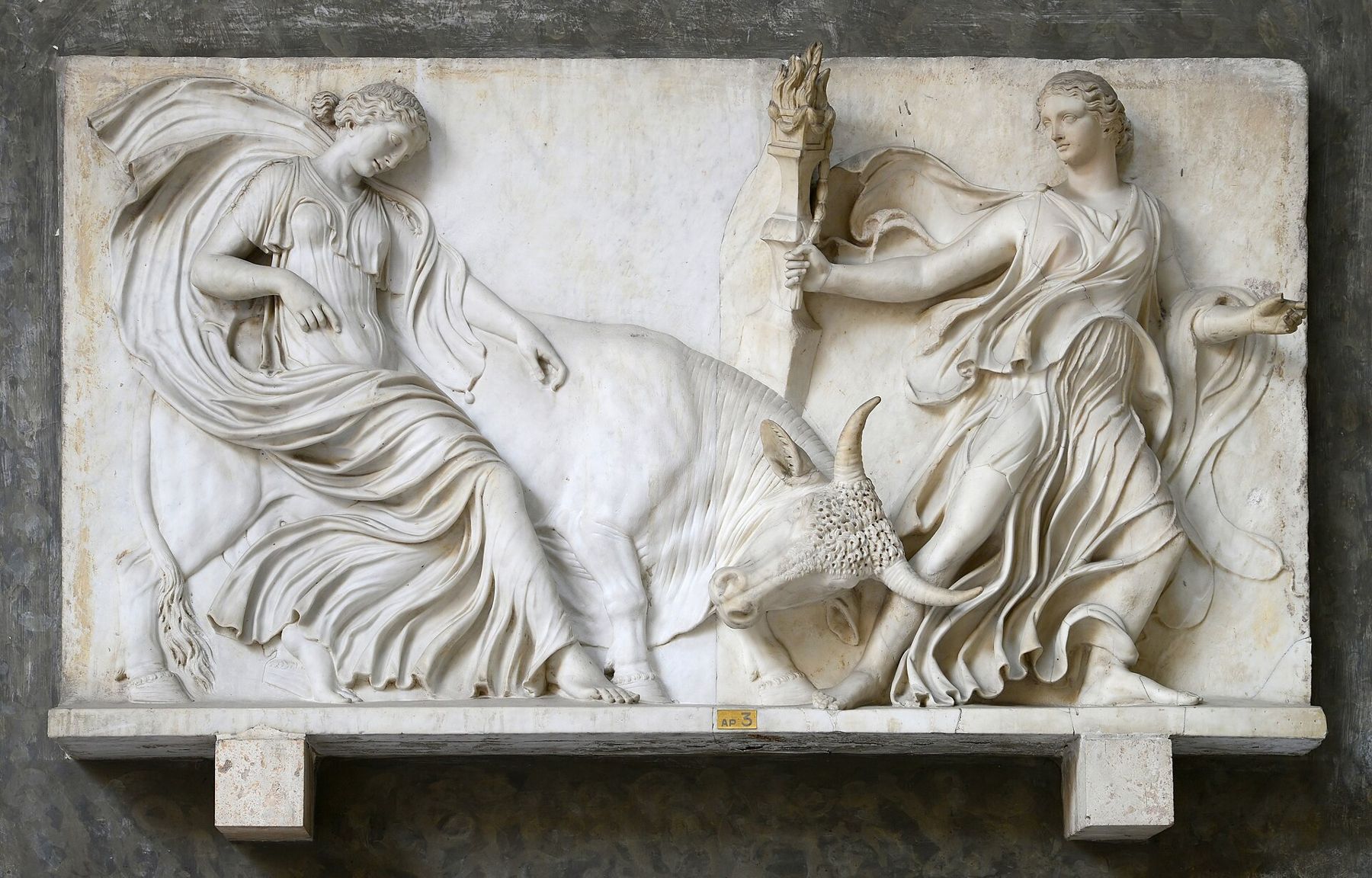
From the Pinacoteca, walk out into the Cortile della Pigna, the Pinecone Courtyard. At one end, in a tall niche, stands the giant bronze pinecone that gives it its name, a Roman piece that once spouted water, flanked by bronze peacocks. In the middle of the lawn sits a modern bronze sphere that splits open to show machinery inside; people circle it for photographs. The courtyard is the best place in the whole complex to sit down, so do it now.
Then go up into the Pio-Clementino, the museum of classical sculpture. The core of it is the small Octagonal Courtyard, open to the sky, where the Laocoön writhes with his sons in the coils of the serpents and the Apollo Belvedere stands calmly in the next niche. These are among the statues that shaped Renaissance art, and the artists of the Sistine Chapel knew them well. Nearby are the Belvedere Torso, a muscular fragment with no head, arms or lower legs, and the Round Room, with a vast basin of purple porphyry in the centre of a Roman mosaic floor.
Arrive at the chapel with energy left, not having spent it all in the corridors.
If you can, see the sarcophagi in the Greek Cross Room too: two huge porphyry coffins, one carved with battling horsemen, the other with vines. Then take a breath. The next stretch is the busiest.
The long corridor to the Raphael Rooms
From here the route funnels into a single line of galleries on the upper floor, one after another: the Gallery of the Candelabra, the Gallery of Tapestries, and the Gallery of Maps. This is where the Museums feel most like a procession, and there is not much to do about it except slow down when you can and look up.
16:00Another hourCastel Sant'Angelo, from tomb to terraceThe Gallery of Maps is the reward. Its walls are painted with large maps of the regions of Italy, made in the 1580s under the direction of the cosmographer Ignazio Danti, each with its towns, rivers and battles, and the ceiling above is gilded and painted from end to end. Find your own region, or the familiar boot shape of the coast, and note how well the mapmakers knew it.
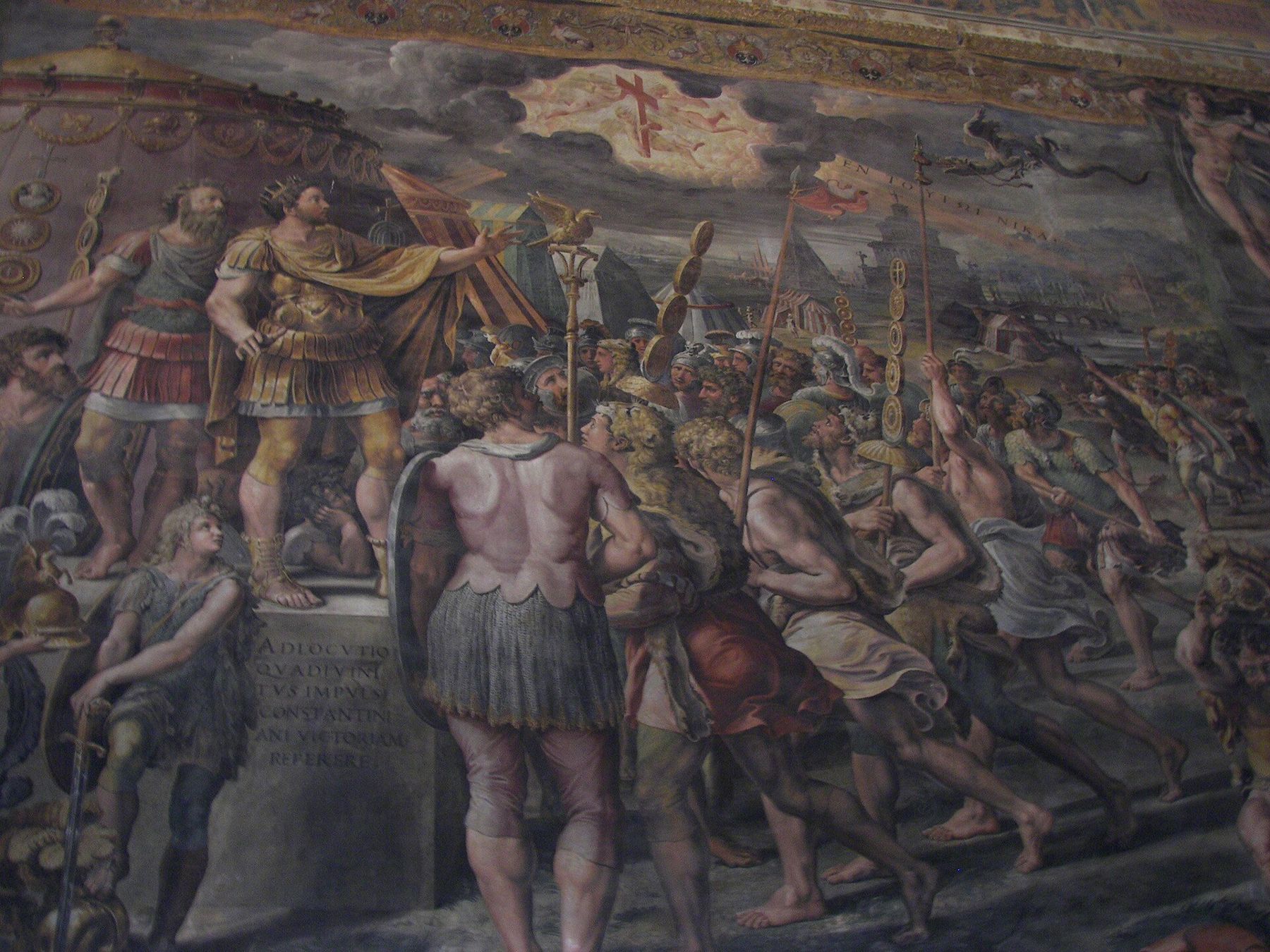
Beyond, the route reaches the Raphael Rooms, four state rooms painted by Raphael and his workshop for the papal apartments. The order you meet them in depends on the day's route, which changes with the crowds. The Hall of Constantine, the largest, was painted mostly by his assistants after his death, with great battle and vision scenes on its walls.
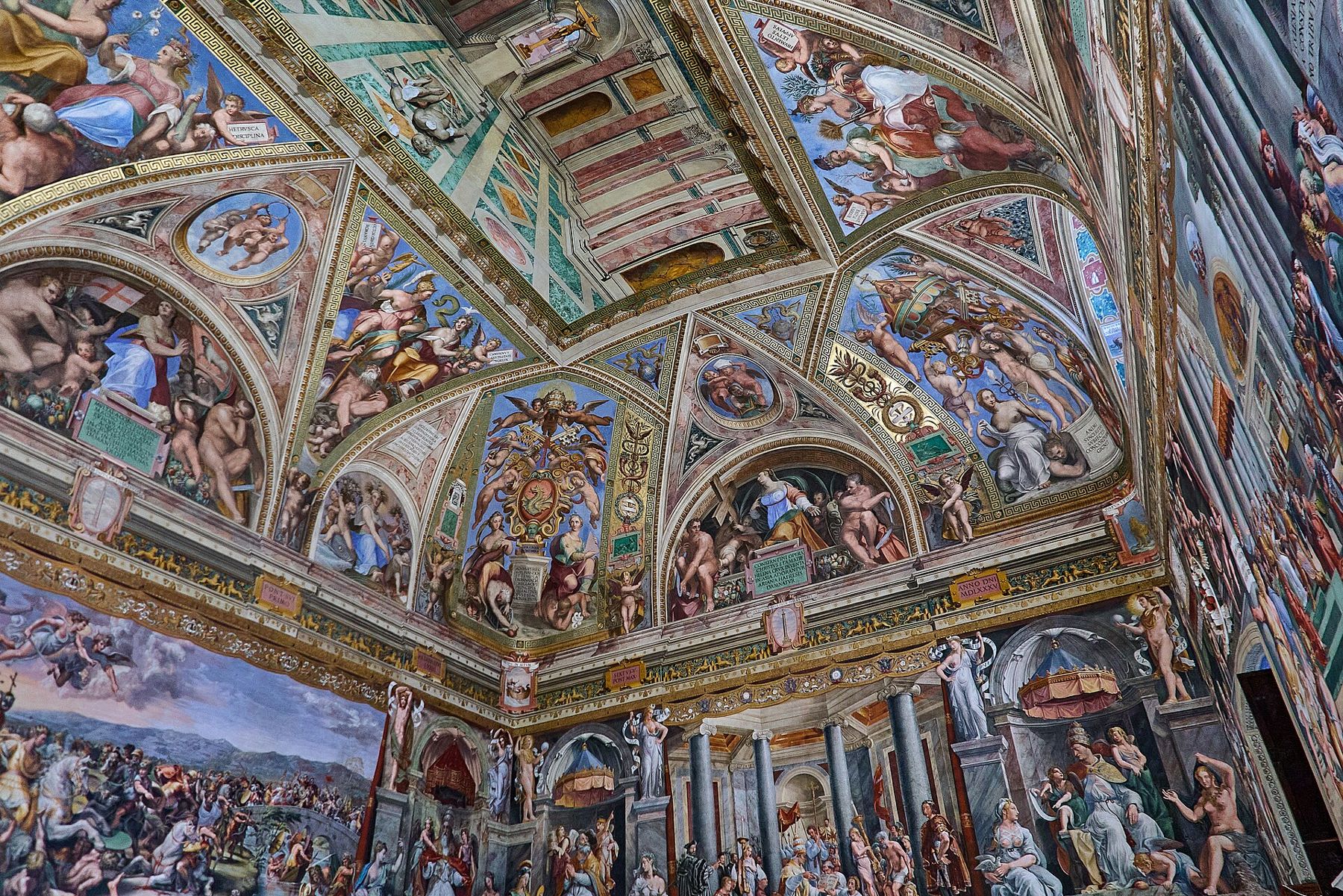
In the Room of the Segnatura you find the School of Athens, the philosophers of antiquity gathered in an imagined building, and facing it the Disputation of the Holy Sacrament. In the Room of the Fire in the Borgo, a fresco shows a fire in the quarter just outside the Vatican put out by a pope's blessing; when you later walk the old Borgo streets, you are close to where it is set.
Saving yourself for the Sistine
After the Raphael Rooms the signs lead on through the collection of modern religious art and down towards the Sistine Chapel. The modern rooms are quieter than anywhere else on the route, and you can walk through them quickly or sit for a few minutes on a bench. Do sit. Arrive at the chapel with energy left, not having spent it all in the corridors.
The chapel itself needs its own preparation, and gets it in our page on standing under the Sistine ceiling. The main points: no photographs, no talking above a murmur, and you can stay as long as you like within reason. Most people stand for ten minutes and leave; twenty or thirty minutes is better, and the benches along the sides are there to be used.
There are toilets and places to buy food and water along the route, but they are busy. Bring a refillable bottle; there are drinking fountains in the courtyards.
Out by the spiral stair
From the Sistine Chapel, the main route takes you back out to the exit near the entrance. On the way you usually pass the old Vatican Library halls, long and painted, with cases of manuscripts and objects. A door in one corner of the chapel sometimes leads groups straight to St Peter's, but individual visitors are usually sent the long way round.
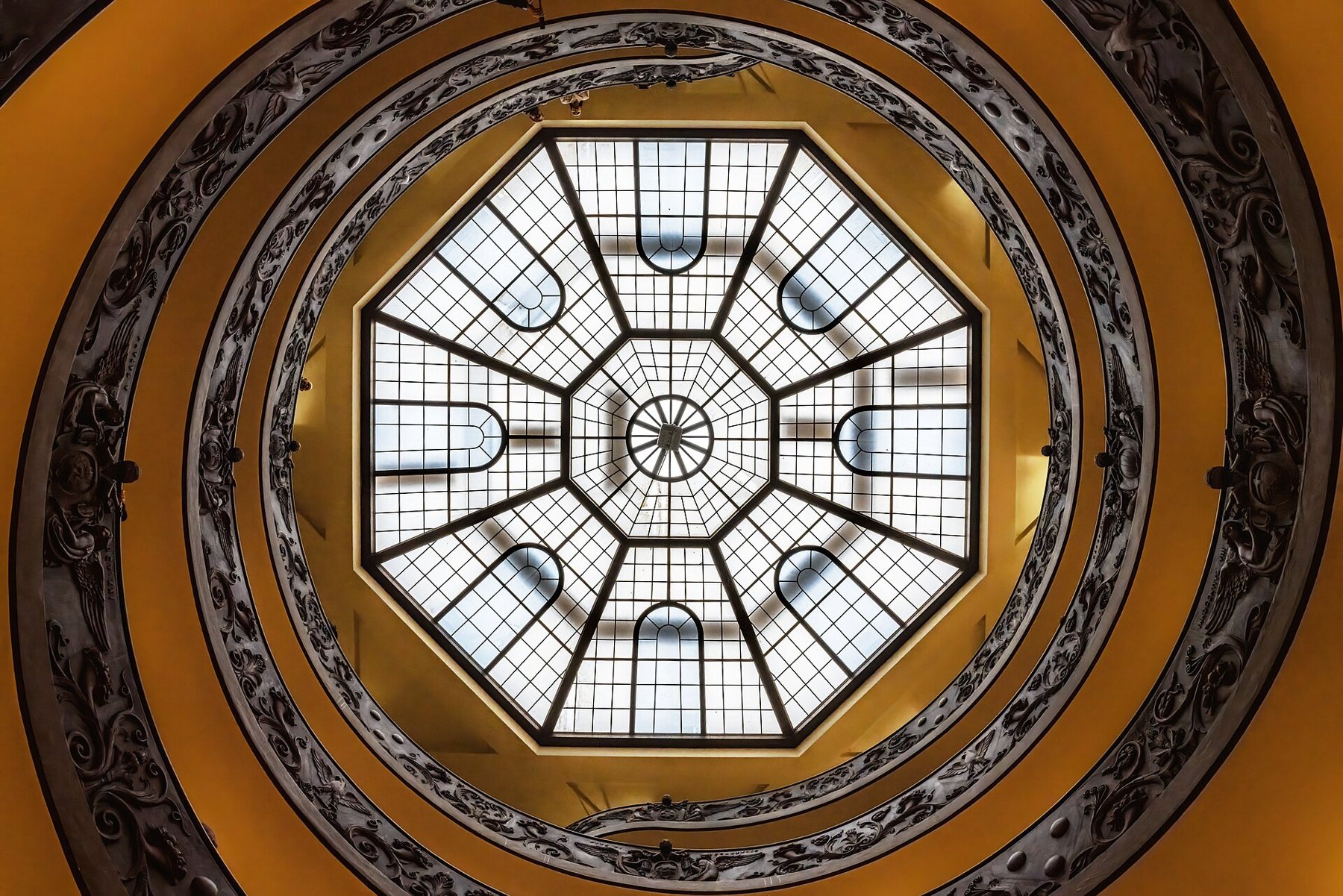
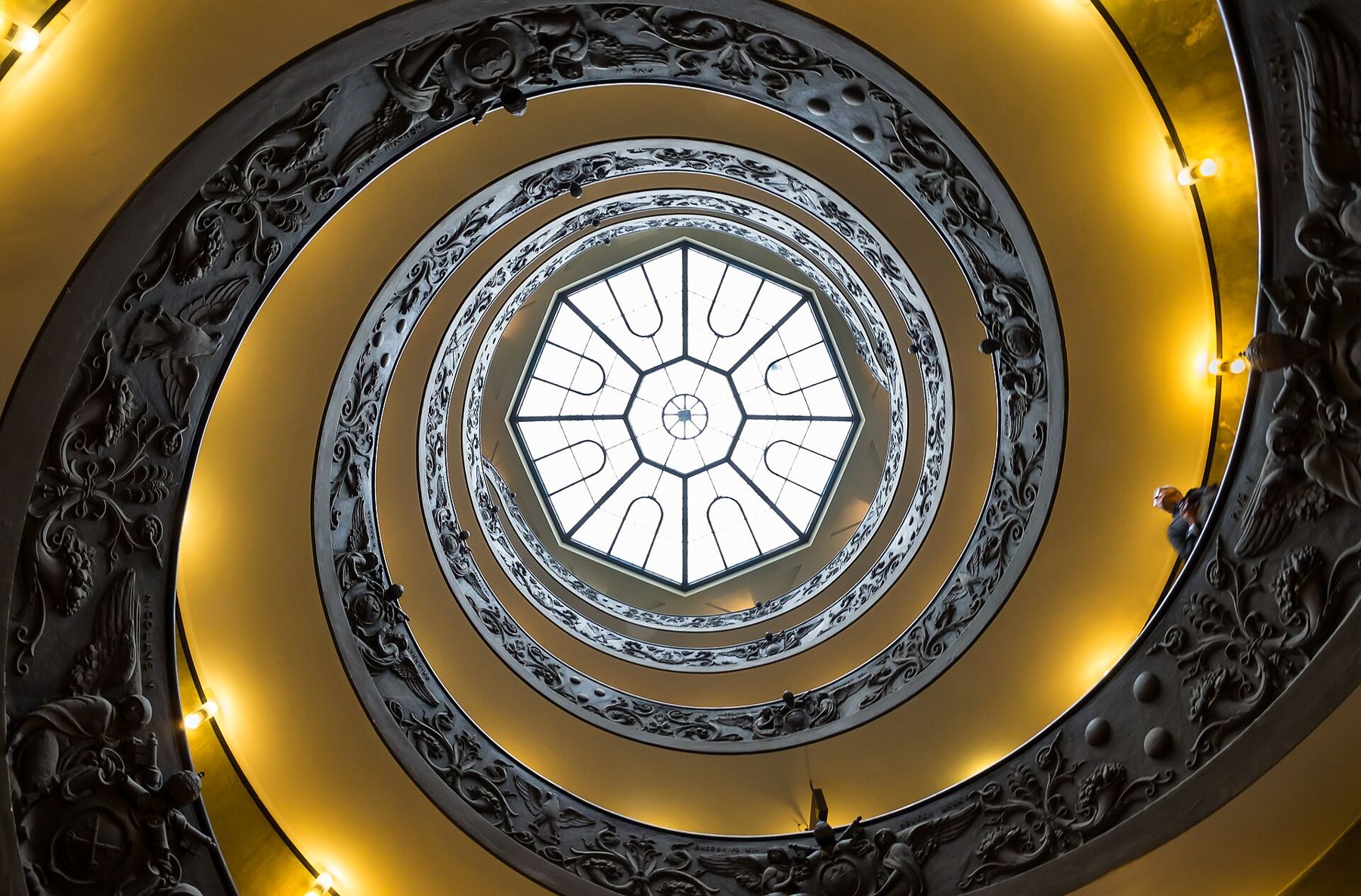
The last thing you see is the spiral staircase, a double helix of shallow ramps built in the 1930s, one spiral for going down and one for going up, twisting under a glass dome. Stand at the bottom and look up; it is the photograph everyone takes on the way out, and for once it deserves it.
Outside, you are back on Viale Vaticano, probably at lunchtime. The streets of Prati begin across the road, and a slow lunch in Prati is the right way to end the morning.
The photographs on this walk are credited by name and licence in I fotografi. The other walks are on the list of hours.
Later the same day
- Under the floor: the grottoes and the necropolis
- Mercato Trionfale, the market by the Vatican wall
- Standing under the Sistine ceiling
- Prati at lunchtime: wide streets, cool churches
- The Borgo and the wall the popes ran along
- Castel Sant'Angelo, from tomb to terrace
- Down the Lungara into Trastevere for the mosaics
- Up the Gianicolo for the last light
- Ponte Sant'Angelo after dark