Up the dome of St Peter's, step by step
Hundreds of steps, a gallery hung inside the drum, a stair that leans with the curve of the dome, and at the top a narrow balcony with all of Rome laid out below.
The dome usually opens shortly after the basilica; the first half-hour is quiet, then the stair becomes a slow single file behind groups.
 08:00
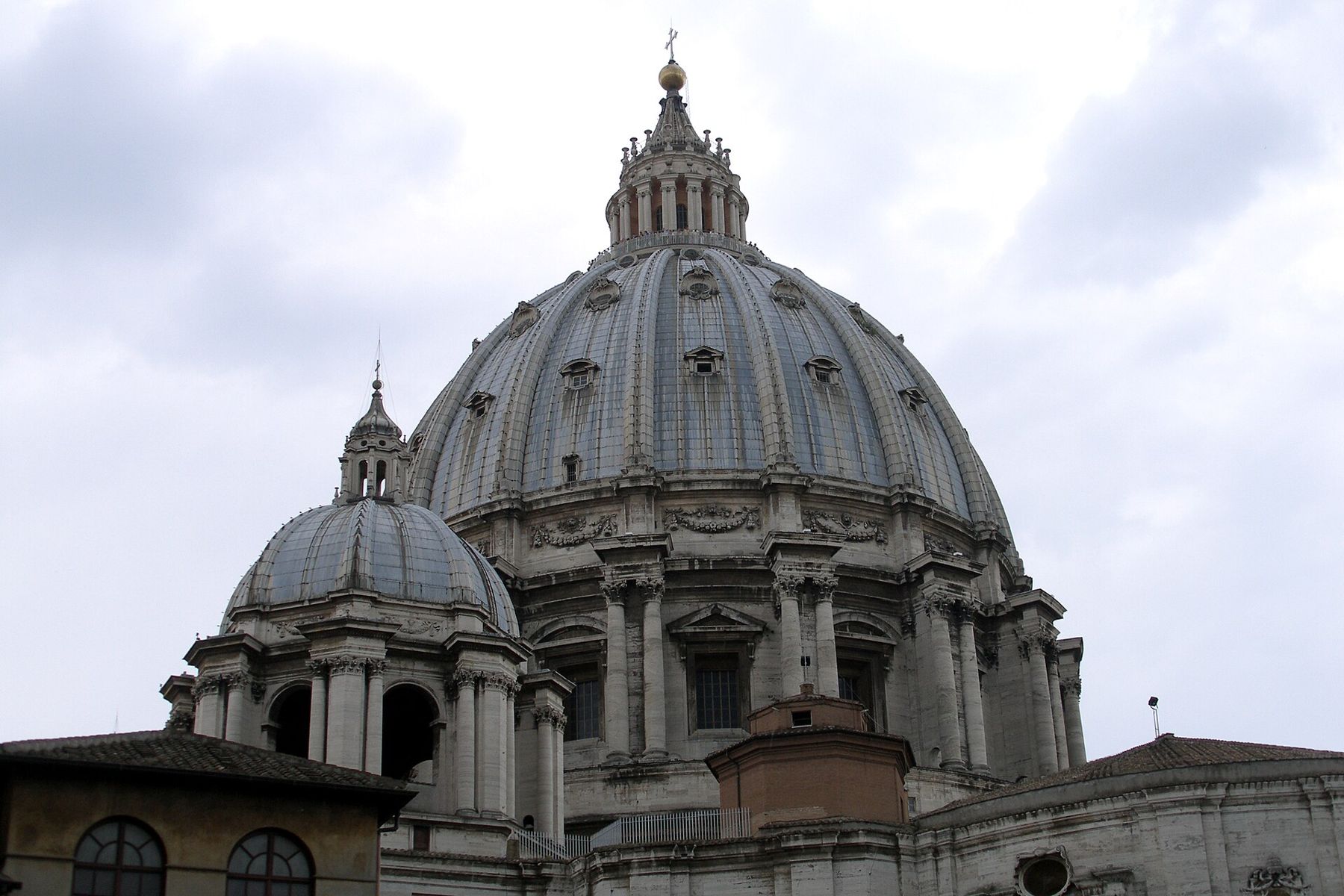
The dome of St Peter's is the one climb in Rome that takes you through the inside of a building as well as to the top of it. On the way up you look down into the basilica from the base of the dome, squeeze between its two shells, and come out on a balcony round the lantern. It is not difficult for anyone used to stairs, but it is long, narrow and one-way, and there is no turning back once you are on the upper flights.
Go early. The dome opens in the morning, usually not long after the basilica, and closes earlier than you might expect; times and prices change and are posted on the official site, so check before the day. If you have already seen the basilica at opening time, the climb follows on naturally.
Finding the way in
You pass through the same security check as for the basilica, under the colonnade. Then, instead of climbing the steps into the portico, look for signs to the cupola on the right-hand side of the building as you face it. The ticket desk sits at the foot of the climb and offers two ways up: on foot all the way, or by lift to the roof level and on foot from there. Either way the final stretch is stairs only.
All the way on foot it is a little over 500 steps; the lift saves a couple of hundred of the easier, wider ones at the bottom. Unless you enjoy stairs for their own sake, take the lift and keep your legs for the part that matters.
Leave large bags and anything awkward behind before you set out; there is nowhere to put them on the way up, and a backpack makes the narrow upper stair much harder for you and for everyone behind. Wear shoes with grip, since the old steps are worn smooth and slightly hollowed in the middle. Allow about an hour for the whole visit, more if the stair backs up behind a group.
The gallery inside the drum
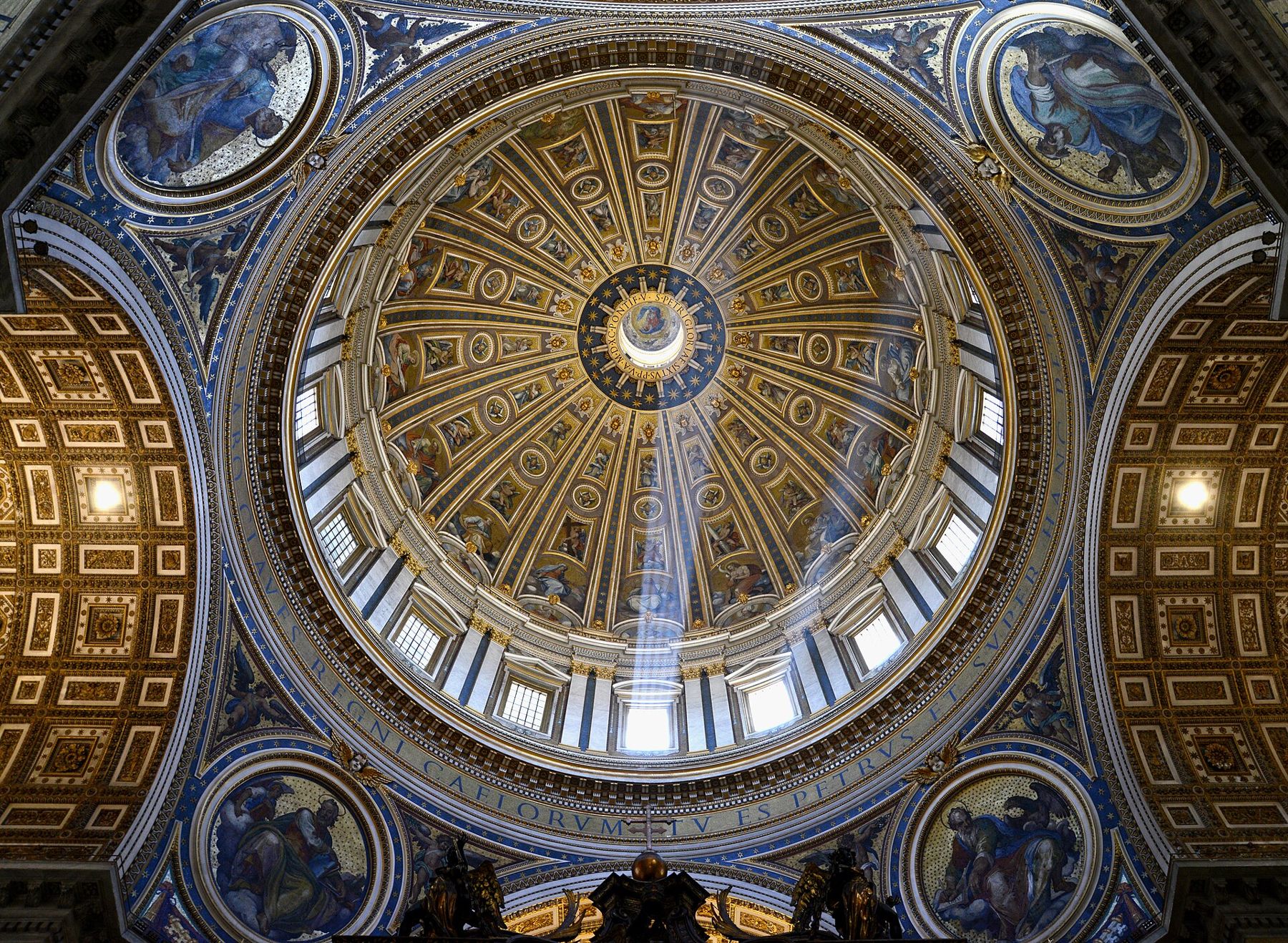
From the roof level a short stair takes you inside the base of the dome, onto a narrow walkway that runs round the drum high above the floor of the basilica. A tall protective screen stands between you and the drop, but you can see through it clearly. Straight down is the bronze canopy of Bernini's baldacchino, looking like a toy; the people around the papal altar are dots.
This is also the only place where you are close to the decoration of the dome. The great letters running round the base are taller than you are. The figures in the panels above, which from the floor look painted, turn out to be mosaic, thousands of small tiles set at slight angles so they catch the light. Spend time here: it is the calmest part of the climb, and the most surprising.
When you are ready, the route leads out of the gallery and up into the dome itself.
The stair that leans
The dome has two shells, an inner one you see from below and an outer one you see from the city, and the stair climbs in the space between them. As you go higher, the outer wall bends in over your head and the steps narrow. In places you walk with your body tilted to match the curve, one shoulder brushing the wall. Small windows let in air and a slice of sky.
In places you walk with your body tilted to match the curve, one shoulder brushing the wall.
Near the top the stair becomes a tight spiral, and a thick rope hangs down the centre to hold on to. There is nowhere to overtake and nowhere to stop for long, so go at your own steady pace and let the people behind you set theirs. If you are tall, mind your head.
15:00Another hourThe Borgo and the wall the popes ran alongThe dome was designed by Michelangelo, who did not live to see it finished; Giacomo della Porta completed it after his death, raising the profile slightly. You feel that profile here more than anywhere: the curve that looks so smooth from Via della Conciliazione is the wall pressing against your arm.
On the lantern balcony
You come out into the open on a narrow railed balcony running round the base of the lantern. Walk all the way round; there is room, just, for two people to pass.
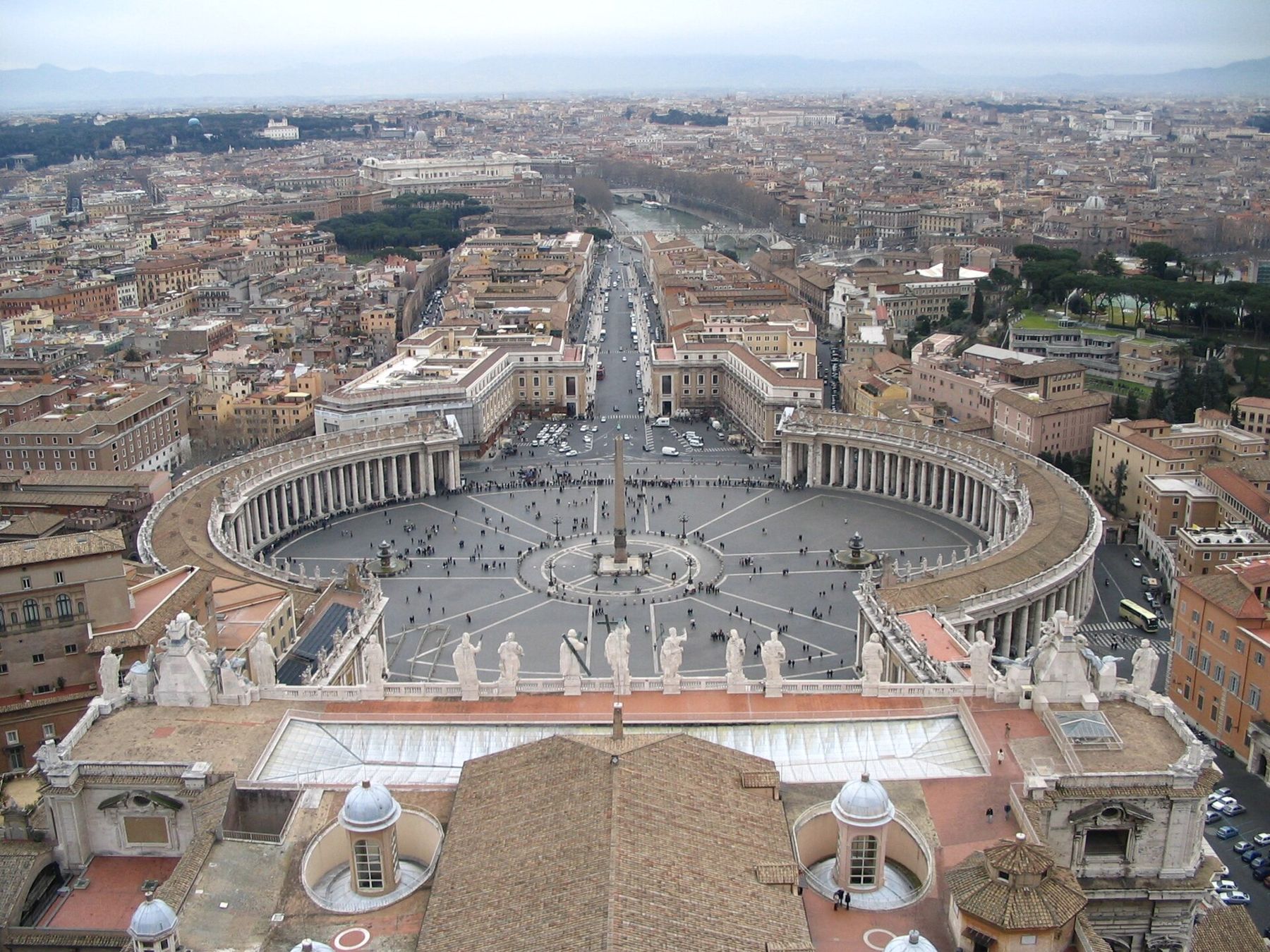
Facing east, the square lies straight below you, the colonnade drawn as neatly as a plan, the obelisk at its centre and Via della Conciliazione running away towards the river. Beyond it, follow the line of the Tiber to the round bulk of Castel Sant'Angelo, and then the domes and bell towers of the centre spread out to the hills. On a clear morning you can see the mountains beyond the city.
Turn the corner and the view changes completely. To the west lie the Vatican Gardens, green and orderly, with the buildings of the small state set among them. To the south the long ridge of the Gianicolo, the Janiculum, runs above Trastevere; later in the day it is the best place to look back at this dome, as in the walk up for the last light.
The morning is the best time to be up here. The sun is behind you as you look over the square, the stone is cool, and the haze that softens the afternoon view has not yet built up. Bring water: there is little shade at the top, and in summer the balcony heats quickly.
The way down, and who should not go up
The descent is by a separate stair and brings you out onto the roof of the basilica, a broad terrace with the small domes of the side chapels around you and the great dome rising overhead. There are toilets and somewhere to sit. Walk towards the front of the building for a look at the backs of the giant statues on the facade, the city framed between them.
The route down usually leads you back inside the basilica, so you can visit it afterwards without queueing again. Keep the dress code in mind for that reason alone: shoulders and knees covered.
Skip the climb if you are uneasy in narrow spaces or with heights, if you have heart or breathing problems, or if stairs are hard for you; there is no lift beyond the roof, and once you are in the upper section you cannot turn back easily. It is not suitable for pushchairs, and small children may find the leaning section frightening.
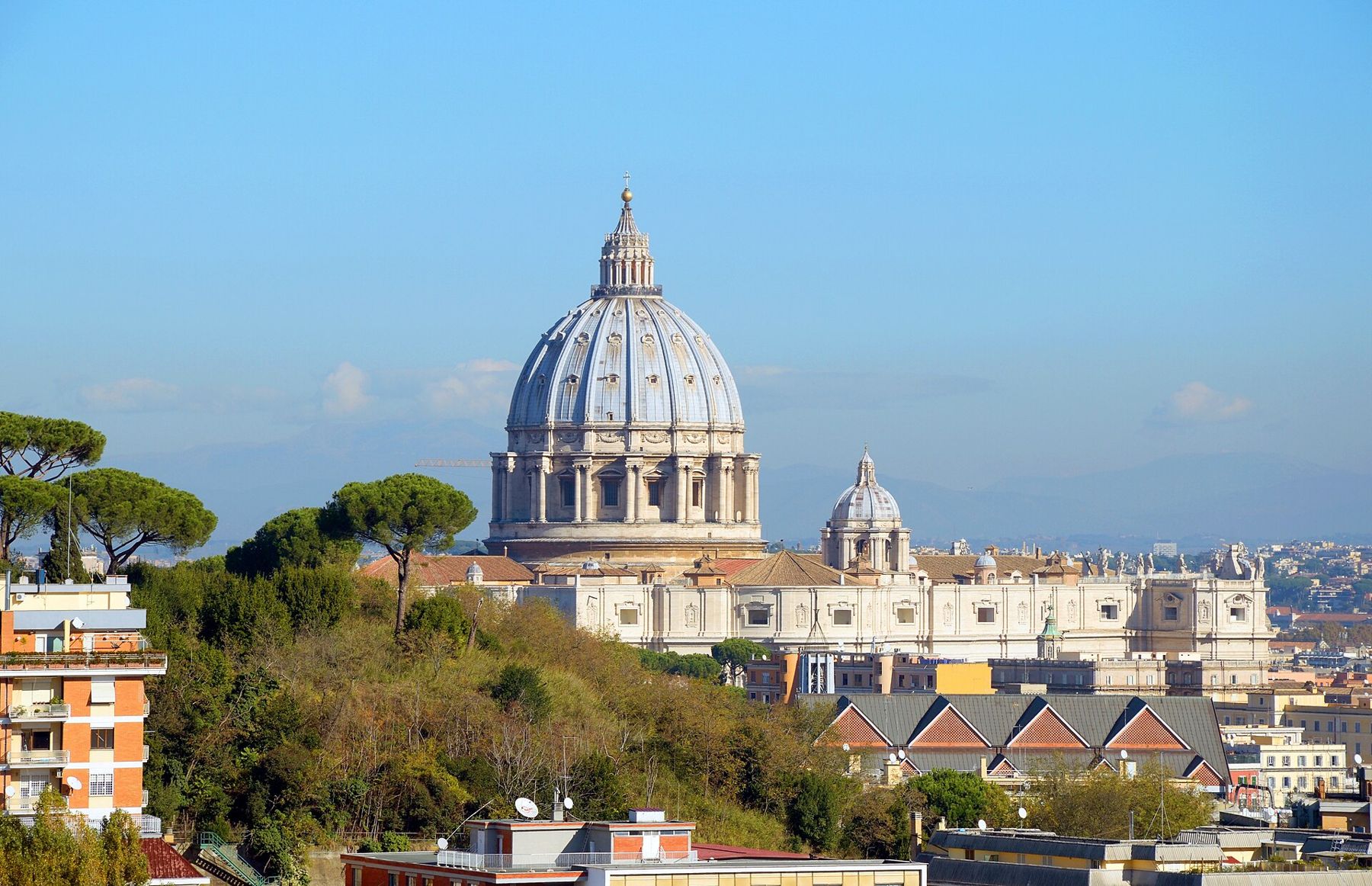
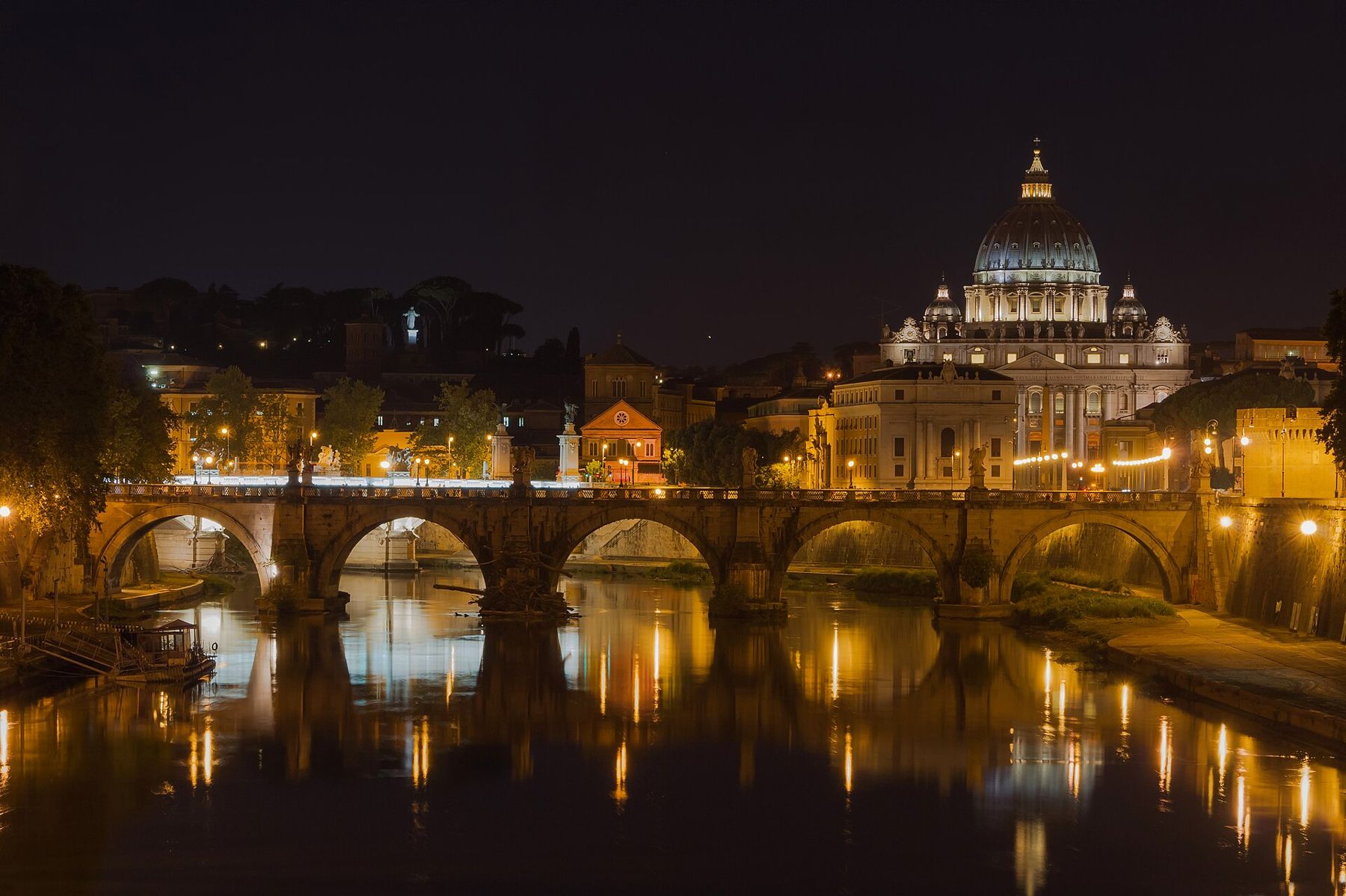
Afterwards, look for the dome from below wherever you go in the city. From the river bridges at night, lit from beneath, it looks very far away, and you will remember the rope on that last spiral.
The photographs on this walk are credited by name and licence in I fotografi. The other walks are on the list of hours.
Later the same day
- The Museums, in an order that keeps you sane
- Under the floor: the grottoes and the necropolis
- Mercato Trionfale, the market by the Vatican wall
- Standing under the Sistine ceiling
- Prati at lunchtime: wide streets, cool churches
- The Borgo and the wall the popes ran along
- Castel Sant'Angelo, from tomb to terrace
- Down the Lungara into Trastevere for the mosaics
- Up the Gianicolo for the last light